
Charitable health fund announces $1.5M grant
Trending
CHARLESTON -- Highmark West Virginia Charitable Fund for Health has announced a $1.5 million grant to fund the "Healthy Neighborhood" pilot, noted as "an innovative and transformational food insecurity program with collaboration" between Vandalia Health Network, Marshall Health, Mountain Health Network, InComm Healthcare, and Dollar General.
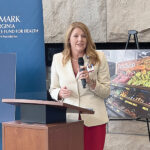
Charitable Fund for Health is a part of the Highmark Foundation and hosted an event at the CAMC Cancer Center in Charleston to announce the effort.
The opinion that "food is medicine" was expressed several times during today's program as Jim Fawcett, president of Highmark West Virginia, welcomed speakers to address the gathering and provide background and details.
According to Feeding America, over 217,000 West Virginia adults and children face food insecurity, and this multi-sector partnership demonstrates how connecting individuals to social care and tackling barriers to health in West Virginia can improve communities' health and potentially reduce long-term costs of care for taxpayers, employers, and families.
The initiative plans to address food insecurity and improve health outcomes for eligible West Virginia residents by providing prefunded, restricted-use InComm Health debit cards for exclusive use at Dollar General stores, which provide an affordable assortment of nutritious foods in convenient locations across the state, including produce at select locations. Participants may only use the funds to purchase Dollar General's "Better for You" food items, which are specially identified on store shelves and highlight healthier product options.
"This program is a unique opportunity to help improve the health of our community by providing nearby access to healthier and more nutritious food to West Virginians, while also addressing the needs of some of the most rural communities facing food insecurity," said Fawcett. "The support of the organizations involved in this partnership is tremendous, and we applaud them for positively impacting the health of our communities."
Vandalia Health Network, Marshall Health and Mountain Health Network are actively engaged in this pilot project and in their roles as health care providers. In this program, they identify patients who are food-insecure and have one or more chronic conditions and recommend this resource to patients who meet the program's qualifications.
In the U.S., social determinants of health (SDOH)-- where people live, their social support, access to health care, education and healthy food, financial distress, etc. -- can impact up to 80% of someone's health. The investment allows participating organizations to collectively shift emphasis from healthcare to health, understanding root causes that can initially impact an individual's health.
"The Highmark West Virginia Charitable Fund for Health grant aligns with Highmark Health's overall goal of reducing food insecurity and improving health outcomes by using food as medicine," shared Nebeyou Abebe, senior vice president of social determinants of health for Highmark Health. "All of this is ultimately driven by The 80% Project, led by Highmark Blue Cross Blue Shield of West Virginia."
"Having a healthy neighborhood is so much more than just health care," said Michelle Coon, president, Vandalia Health Network. "A couple keys to a healthy neighborhood starts with reducing food insecurity and promoting healthier eating habits. This ultimately leads to improved health outcomes and a reduction in the cost of patient care."
"CAMC has been working to increase health care access in rural areas during the past few years with the purchase of a mobile unit, clinical affiliation agreements and expanding telemedicine," said Glenn Crotty, Jr., MD, president and CEO, Charleston Area Medical Center, and executive vice president of Vandalia Health. "The healthy neighborhood initiative is another step to assuring access to essential health-related services in the rural communities."
"The team at Mountain Health Network and our partners at Marshall Health are proud to be part of the Healthy Neighborhood initiative," said Larry Dial, MD, chief clinical officer for Mountain Health Network and associate professor with the Joan C. Edwards School of Medicine. "We are grateful to Highmark for its commitment to improving the health of the communities we serve by supporting improved access to healthy food choices for those experiencing food insecurity."
InComm Healthcare, a division of InComm Payments, a global leader in innovative payments technology, is providing the restricted-use debit card for the pilot free of charge.
Individuals are referred by participating healthcare providers to the Healthy Neighborhood program and will be screened for eligibility for the program based on criteria to evaluate need.
Physicians at Vandalia Health Network, Marshall Health, and Mountain Health Network are currently screening and identifying patients who are food- insecure. Enrollees will receive a pre-loaded debit card in the mail within seven to 10 days after their acceptance in the program and receive supplemental funding each month while they are enrolled.
Participants are initially enrolled for six months but can receive benefits for up to three years. They will also receive individual support, such as assistance finding a primary care doctor and support for chronic health conditions through the participant's doctor, if applicable.