
Elkins native earned Purple Heart, Distinguished Flying Cross
Trending
Submitted photo
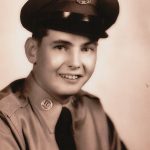
Leslie 'Eddie' Earl Digman served first in the U.S. Air Force and then in the Army.
Editor's note: This article is the first in The Inter-Mountain's Unsung Heroes series for 2020, which features veterans in our area sharing first-hand accounts of their military service. The series will be published through Veterans Day.
ELKINS -- An Elkins native and Vietnam veteran achieved his dream of flying -- and was awarded many medals, including the Purple Heart and the Distinguished Flying Cross -- during his 23 combined years of service with the Air Force and Army.
Leslie "Eddie" Earl Digman was born in 1936 in Elkins. During his senior year at Elkins High School in 1954, Digman decided to enlist in the Air Force.
"I wanted to fly and the Air Force had the airplanes, so that looked like a good idea," Digman said. "It didn't work out that way."
He completed basic training in Elmira, New York, before being assigned to Keesler Air Force Base in Biloxi, Mississippi, where he studied air traffic control.
Digman was then assigned to various bases in the United Kingdom due to a shortage of air traffic controllers. While he was there, he met and married his wife, Gerry, from England.
"I enjoyed Europe a lot. I enjoyed a lot of the food. (There were) a lot of different people and a lot of different cultures. I wouldn't have done anything to keep from going back to Europe again. I enjoyed every bit I was over there. I enjoyed the experience," he said.
After his European assignments, Digman returned to Elkins for a period of time.
"I had many, many jobs in Elkins. I worked in a bakery, worked over at the lumber mill, worked as a printer (and) worked as a truck driver," said Digman. "I couldn't hardly make ends meet so I went back to the Army."
In the Army, Digman attended drone school in El Paso, Texas.
"I spent nine months out there in El Paso (and) from there, I went to Italy," he said.
"Then they found out I was a qualified air traffic controller, so after almost a year I went back into (the ground-controlled approach)," he said. "(I was) talking air craft down when they couldn't see to land at night and in bad weather."
After Italy, Digman applied to flight school and was accepted, but training was deferred as he was sent on a 14-month tour to Vietnam. When he returned from that tour, he completed flight school and returned to Vietnam as a helicopter pilot.
"I was a recovery officer in Vietnam for about four months and I went out and recovered air crafts that had been shot down or the pilot said they were not sure if they were able to fly," he said. "I went out, recovered them and took them back to base, back to maintenance, to get them repaired."
"I almost got shot down a couple of times doing that, too," he said. "They just didn't like me for some reason."
Digman said, despite the war around him, that his most extreme memory was traveling from Fort Bennings, Georgia to Vietnam by ship through a typhoon.
"One of the most dangerous things we ran into over there, believe it or not, was the baboons," he said. "When you get a whole group of them together, they will attack just about anything."
In addition to the baboons, Digman had to contend with six-foot-tall anthills, venomous snakes and potentially booby-trapped elephant grass higher than his head.
"Elephant grass grows about six to eight feet tall and sometimes you've got to land on that," he said. "At night, we used to land on riverboats and resupply them. To land on river boats, you learn to put just one skid on the boat and let people on and off. You're riding up the river, the boat's still going, you're still going… It's just your job. You learn to do it and it makes you a better pilot."
In 1968, Digman was awarded the Distinguished Flying Cross Medal for heroism and going above and beyond the call of duty.
"Digman distinguished himself while serving as a pilot aboard a (helicopter) in support of friendly forces," reads the award letter from Assistant Adjutant General Lee Peterson. "On short final to the landing zone, his ship came under intense enemy fire. Despite the intense fire, he safely landed his ship in the area and discharged the troops."
"While on departure from the hostile area, he observed a friendly ship doing down as a result of enemy fire and immediately went to the aid of the downed crew. Departing the area again, after loading the downed crew and the equipment aboard his ship, he observed a gunship crash and burst into flames near the enemy infested landing zone," it reads.
"Disregarding his own safety, he immediately landed his ship by the burning ship and extracted the only survivor of the crash. Departing the area for the third time, his ship came under heavy enemy fire. Although wounded in the face by flying plexiglass and metal fragments, he remained calm and safely maneuvered his heavily laden and badly damaged ship out of the area," it reads.
"His actions were in keeping with the highest traditions of the military service and reflect great credit upon himself, his unity and the United States Army," the award letter reads.
In addition to the Distinguished Flying Cross Medal, Digman also received a Purple Heart, the Vietnam Cross of Gallantry, a Vietnam Tet Offensive Medal and a Bronze Star. He achieved the rank of Army Chief Warrant Officer 3 during his time in service.
"From Vietnam, I went back to Fort Bennings," he said. "I was there from 1970 to 1977 when I finally got out. I was an instructor pilot, test pilot and maintenance officer all in one."
Retiring in 1977, Digman returned home.
"I decided that I had been halfway around the world and back but I had never seen the United States. I went driving a truck for awhile… Now, it's a little bit better, but back then when we came out of Vietnam, you didn't want to tell anybody you'd been to Vietnam or in the military. That was the worst thing you could do," he said.
He joined many service organizations after military retirement and was commander of Chapter 2205 of the Military Order of the Purple Heart in 2013 and 2014. He is also a member of the Military Officers Association of America and is currently serving as treasurer.
Digman now resides in Opelika, Alabama, on his 47-acre farm with his many animals. He and his late wife Gerry, who passed in 2018, raised three daughters, all of whom served in the U.S. Armed Forces.