
Brothers sentenced for running $15K a month marijuana ring
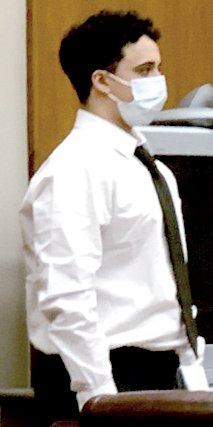
The Inter-Mountain photos by Amanda Hayes Robert Quici appears in court this week.
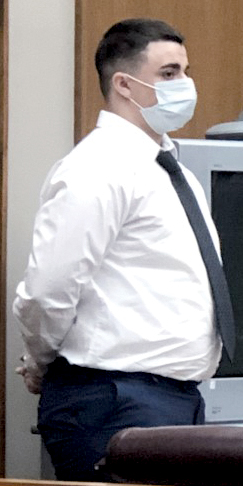
Joseph Quici appears in court this week.
The Inter-Mountain photos by Amanda Hayes Robert Quici appears in court this week.
Joseph Quici appears in court this week.
Trending
BUCKHANNON -- Two brothers who authorities say were bringing in $10,000 to $15,000 a month from a THC and marijuana enterprise were sentenced Thursday in Upshur County Circuit Court.
Robert Thomas Quici, 21, and Joseph David Quici, 20, each previously pled guilty to one count of possession of controlled substance with intent to deliver marijuana, a felony, and one count of possession of controlled substance, marijuana, a misdemeanor.
Both Quicis were represented by attorney James Hawkins. In Robert's hearing, Hawkins asked for a continuation of home confinement or probation, but said that home confinement is compelling because it offers more restriction and support.
"First of all, Mr. Quici has served roughly 171 days in jail while awaiting the disposition of this case," he said. "I think that has been more than sufficient to impress on him not only the seriousness of the case... but his lifestyle choices. I think he was on a collision course with the court system and the jail population. Since the court has put him on home confinement, 140 days now, he has done exceptionally well."
Hawkins noted Robert needed to get his GED, but since he has been on home confinement had been working at his father's detail shop and was paying his fees.
"He has good support in the community through his family," he said. "When I first got involved, I found a young man on the wrong path who was arrogant. Since that time, he has shown tremendous insight. I think at this point in time, he has a very acute awareness of what he needs to be doing and he has demonstrated that by his conduct."
Hawkins pointed to changes in society and laws varying in different states about hemp, marijuana and other products, but Judge Jake Reger said, "This isn't hemp. My reading of this report is he was dealing in highly concentrated marijuana that had THC in it."
Hawkins said, "It's right in our faces every day. When you take a young person and you expose them to circumstances...the temptations are great. They make bad choices. Does that necessitate a penitentiary sentence for him? Certainly not."
Hawkins said that Robert "still has some maturing to do, but thrusting him into the care of the Department of Corrections, I think, is going to be a tremendous step backwards from the strides he has made at this time."
Prosecuting attorney Bryan Hinkle proposed sending Robert to the Anthony Center for Youthful Male Offenders, which helps with GED, job skill training and more. Hinkle also said that what Robert did is a little different than just selling some marijuana.
"This was an ongoing enterprise," he said. "They made substantial money doing that."
Reger said going to the Anthony Center would be appropriate for Robert. However, Robert declined the opportunity to go to the Anthony Center because he would have served longer than the sentence he was given Thursday.
Reger said, "This is a serious case. I had some issues with actually accepting the plea in this case because of the number of charges. I read they were making $15,000 a month selling it. They were shipping it in here. What happens in other states doesn't allow him to ship it in here and sell it. He was pretty blatant about it, based on my knowledge."
Reger noted that Robert was charged with 13 counts of delivery of a controlled substance, a felony; gross child neglect creating substantial risk of death or bodily injury, a felony; three counts of conspiracy, all felonies; and prohibited person in possession of a firearm, a misdemeanor, three counts.
The judge told Robert, "You do act somewhat different, but your attitude was horrible when it first started. I see it has improved some. I compliment Mr. Hawkins. I'm sure he has worked with you on that."
As for Joseph Quici, Hawkins also asked for home confinement or probation.
"I think it would be a step back to incarcerate him," Hawkins said. "He was in a very bad place. He has done a 180 since that time."
Like Robert, Joseph is also working at his dad's detail shop and wants to have his own business someday. Hawkins said getting a GED would be something to work towards.
Joseph also declined placement at the Anthony Center which Hawkins said was a practical matter since his time at the Anthony Center would be longer than the sentence he would have left to serve. Hinkle said he felt the Anthony Center would be appropriate and that what Joseph did does not bode well for alternative sentencing.
"He needs the opportunity to get an education and learn a trade at the Anthony Center," he said.
Reger noted the substantial charges Joseph faced before the plea, including 13 counts of possession with intent to deliver, a felony, three counts of conspiracy, a felony, three counts prohibited person in possession of a firearm, misdemeanor, and one count of failure to appear, misdemeanor.
"I think he is appropriate for the Anthony Center, but he doesn't want to go to the Anthony Center because he can kill his time quicker," Reger said. "I hope you get yourself in a situation where you can get some education, get yourself some kind of trade and get out and make an honest living," he said. "You weren't making an honest living before. It was profitable, but it wasn't honest."
Reger also told Joseph, "I don't care what they are doing in other states. It's wrong and it's a crime."
Reger sentenced both Robert and Joseph to an indeterminate sentence of one to five years for the felony and six months for the misdemeanor, with credit for all time served including time spent in jail (roughly 170 days) and home confinement (roughly 139 days). This means that each of them could be released from the penitentiary after serving about two months.
The remaining counts of the indictments will be dismissed.