
Gov. Justice, House and Senate at odds over tax reform
Trending
Photo Courtesy/WV Legislative Photography
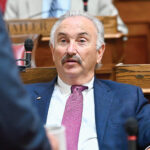
House Finance Committee Vice Chairman Vernon Criss said Gov. Jim Justice's personal income tax cut proposal will be the first time that rates have changed since the late 1980s.
CHARLESTON -- As the special session called by Gov. Jim Justice for lawmakers to consider his personal income tax proposal spills into day three, divisions continue between the Governor and Republicans in the House of Delegates on one side and state Senate Republicans on the other.
The House read House Bill 301, the Governor's 10-percent cut to personal income tax rates, a first time Tuesday after the House Finance Committee recommended the bill for passage. The bill is on second reading today, when amendments can be considered.
"The opportunity that we're trying to create here is for all of us and for a lot of people in West Virginia, especially small business owners and family-owned businesses like myself … (is) the opportunity to enjoy a full tax cut that we've neglected for almost 35 years," said House Finance Committee Vice Chairman Vernon Criss, R-Wood. "We've not changed our tax brackets. We are behind on being able to help the normal tax earners and their families."
HB 301 would cut personal income tax rates across all six income brackets retroactive to Jan. 1, resulting in more money on paychecks and larger tax refunds at the end of the tax year in December. Rate cuts range from a 1-percent cut for those making $10,000 or less per year, reducing the tax rate from 3 percent to 2 percent; to a half-a-percent cut for those making between $40,000 and $60,000 per year and those earning more than $60,000 per year.
If it passes, HB 301 would return $255 million in tax revenue to taxpayers beginning in fiscal year 2023 and $102 million due to the retroactive tax cut for a total of $357.2 million according to a fiscal note from the state Department of Revenue. The bill would return $270 million to taxpayers in fiscal year 2024, with increases in tax revenue expected in the future due to estimated growth in the tax base. The Department of Revenue estimated an administrative cost of $35,000 for implementing the tax cut.
According to the State Budget Office, the personal income tax brought in more than $2.5 billion in tax revenue in the fiscal year that ended on June 30 and accounted for more than 42 percent of the $5.9 billion in total tax collections for the general revenue fund, resulting in a $1.3 billion surplus going into the new fiscal year.
"If we're looking forward in West Virginia, if we can get on a pathway to start lowering our personal income tax when the day will come when we will eliminate our personal income tax, without any question … it is the very thing that will bring real growth to West Virginia," Justice said Tuesday during his virtual briefing with reporters at the State Capitol Building.
Del. Larry Rowe, D-Kanawha, offered an amendment in committee that would have kept the 6.5-percent tax rate for those who earn more than $60,000 per year, and instead give back to each taxpayer between $200 to $290 depending on the tax brackets. That amendment failed.
"One-third of West Virginians would get two-thirds of the tax benefit," Rowe said, repeating a statistic offered by the Department of Revenue estimating that the top one-third of taxpayers would benefit most from HB 301. "What my plan does is treat taxpayers equally, and that's something that we need to be doing for, folks."
HB 301 is similar to House Bill 4007 that passed the House during the 2022 legislative session earlier this year. That bill was never taken up by the Senate, and there remains skepticism among Senate Republicans of the plan. Speaking after Tuesday morning's floor session, Senate President Craig Blair, R-Berkeley, said there was no support among Senate Republicans for HB 301.
"I can tell you right now though to a greater degree, the Governor's plan is not going to work," Blair said. "It's not going to pass in the Senate for sure."
Instead, the Senate Republican caucus released a booklet Monday afternoon detailing their plans if voters approve amendment 2 in November, giving the Legislature the authority to reduce or eliminate six categories of tangible personal property tax rates. Senate Republicans want to fund all 55 counties at their county real tax dollar assessments and provide counties with a minimum of an addition $1 million above their assessments, funding counties directly through the general revenue fund.
Under the Senate plan, the tangible personal property taxes for machinery and equipment, furniture and fixtures, leasehold investments, computer equipment, inventory, and vehicles would be eliminated.
Senate Republicans believe that by maintaining a flat budget combined with the natural growth in tax revenue, they can provide $558 million in funding for county governments and school systems every year going forward. It would also help erase the burden counties face with regional jail fees which are bankrupting smaller counties.
"Every county is going end up with that least a million dollars more than what they're collecting; some significantly more than that," Blair said. "The regional jail cost is taken off the table for them too. They've been complaining about that for a long time."
Blair said his caucus wants to amend their plan into HB 301 or introduce the plan as separate bills. At minimum, Blair said the Senate Republican caucus may introduce a non-binding resolution expressing their support for the tangible personal property plan. Both the West Virginia Chamber of Commerce and the West Virginia Manufacturer's Association prefer focusing on the tangible personal property taxes over a personal income tax cut.
"The momentum's building not only throughout the State of West Virginia, but inside this building and outside this building with the counties as well as people become aware of what we're wanting to do for the people of West Virginia," Blair said. "The momentum is truly building."
Other bills the Senate Republican caucus is considering include a bill that would allow for the reduction of personal income taxes contingent on increased consumer sales and use tax revenue. Sales tax revenue would need to increase by 5 percent in order to trigger an income tax rate reduction spread out among each tax bracket.
Another bill would offer West Virginia taxpayers a rebate on their tax year 2020 personal property taxes on motor vehicles. Senate Republicans also want a bill that would provide a benefit increase to certain teacher and public employee retirees at a cost of $26.5 million. The $1,500 one-time payment would only go to retirees older than 70 as of July 1 with 20 years or more of employment with the state and who receive less than $1,000 per month.
"If (Justice) wants to veto, it's on him," Blair said. "If he wants to veto a (cost of living increase) for pensions that's a one-time payment, or if he wants to veto where we sent him a passed bill where we're given tax relief to all the taxpayers and all the people in West Virginia that own automobile, then that's on the Governor. That not on us."
During his virtual briefing, Justice criticized the Senate Republican tangible personal property tax plan, accusing the majority caucus on wanting to take local control away from counties and putting big business over regular tax payers.
"We can layer in things that benefit big companies that literally don't benefit us in hopes that more business is going to come. You can take away the control of counties having the ability to have a guaranteed revenue sources to where you're putting the control into Charleston … If you do that and move it to Charleston, you're taking a heck of a risk," Justice said.
Despite being against the Senate Republican's tax proposals, Blair said he was thankful that Justice called the special session because it has sparked discussion about tax reform in the state.
"I actually applaud the Governor for putting this on the call, because what it's done is brought awareness to the people of West Virginia and to the counties of West Virginia," Blair said. "We're not asleep at the wheel. We are always working on things … We've done a lot of work preparing for this."