
Lawmakers looking at using federal funds for flood demo projects
Trending
Photo by Steven Allen Adams
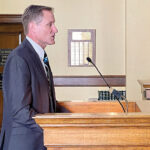
DEP Deputy Cabinet Secretary Scott Mandirola explained that a pilot program for tearing down dilapidated properties could be used for tearing down properties destroyed by flooding.
CHARLESTON -- Lawmakers in West Virginia are looking at using federal COVID relief to demolish properties ruined by flooding using a state pilot program.
The West Virginia Legislature met in Charleston Sunday for the first day of July interim meetings.
The Joint Legislative Committee on Flooding met Sunday afternoon and heard a report from the committee's workgroup looking at how to use funding from the American Rescue Plan Act for flood demolition projects.
West Virginia received $1.35 billion in ARPA funds in two separate tranches with the most recent in May. The $1.9 trillion plan provided $350 billion in direct funds for states. ARPA allows states to use their allotments for water, sewer and broadband infrastructure projects.
According to guidance from the U.S. Treasury Department, ARPA funds can also be used for management and treatment of stormwater or subsurface drainage water; watershed projects meeting certain Clean Water Act criteria as determined by the U.S Environmental Protection Agency; or reuse/recycling of wastewater, stormwater, or subsurface drainage water.
Senate Minority Leader Stephen Baldwin, D-Greenbrier, provided the work group's report to the full committee. The workgroup was formed in January and began its work after the end of the 2022 legislative session in March. Baldwin said the first goal of the group was determining which state agency would be best equipped to manage a flood demolition program, deciding on the Department of Environmental Protection.
"It seems to me that the DEP is the right fit," Baldwin said. "They have demolition program's ongoing right now and could administer this program alongside theirs doing very similar work...it is our sense that we could use their existing application process and their existing staffing capacity to administer a program like this, again, paralleling what they already do."
Baldwin said the flood demolition program the workgroup is discussing would focus on projects beginning with the 2016 flood that didn't receive funding through the Federal Emergency Management Agency or through the U.S. Department of Housing and Urban Development funding managed by the RISE West Virginia program within the state Department of Economic Development. It would also focus on demolitions for flooding since 2016 all across the state.
Scott Mandirola, deputy cabinet secretary for DEP, said the Dilapidated Structures Program would be an ideal fit for a flood demolition program. The $10 million pilot program was funded by the Legislature this year and slated to begin next month in 22 communities across the state.
"We feel like we could accomplish the goal that (Baldwin is) setting out for," Mandirola said.
The next step for the workgroup is trying to determine how much ARPA funding is appropriate for a flood demolition program. Mandirola believes DEP can use existing data to help determine how much funding would be needed.
"We believe we've gathered a substantial amount of information from all 55 counties and all municipalities in the state," Mandirola said. "We sent a questionnaire out prior to receiving the $10 million inquiring of all of these communities and municipalities and counties do you have a program to deal with this? And we asked them a whole list of questions, and we got 81 responses from that. We began to put a database together. Since that time, we've reached back out and pulled in additional information. From that, we can figure out roughly...how much it should cost per structure, whether it be commercial or residential."
Lawmakers will remain in Charleston through Tuesday unless a special session beginning Monday requires lawmakers to stay longer.