
Trending
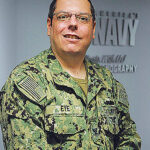
GULFPORT, Miss. -- Petty Officer 1st Class Shaun Eye, a native of Parsons, is part of Naval Oceanography ensuring the U.S. Navy maintains freedom from the ocean floor to the stars at Naval Meteorology and Oceanography Command.
Sailors and civilians working throughout Naval Oceanography collect, measure, and analyze the elements of the physical environment (land, sea, air, space). They synthesize a vast array of oceanographic and meteorological data to produce forecasts and warnings in support of safety of flight and navigation.
Eye graduated from Tucker County High School in 2000 and currently serves as a yeoman.
"Naval Oceanography operates simultaneously at the strategic, operational and tactical levels of warfare in every theater around the globe," said Rear Admiral Ron Piret, commanding officer, Naval Meteorology and Oceanography Command.
"We pride ourselves in our ability to characterize the battle space and then predict changes in the environment over time. Every ship that sails, every aircraft that takes flight, every submarine that dives beneath the surface of the ocean has to go to sea with the information that Naval Oceanography provides."
Eye, the values required to succeed in the Navy are similar to those found in Parsons.
"I learned to give respect to all people you meet," said Eye.
Naval Oceanography personnel demonstrate expertise in Hydrography, Geospatial Information and Services (GIS), datum issues, and Tactical Decision Aids (TDA). They combine knowledge of the operating environment with a thorough understanding of warfighting capabilities to assess and predict environmental impacts to friendly and enemy platforms, sensors and weapon systems.
Serving in the Navy means Eye is part of a team that is taking on new importance in America's focus on strengthening alliances, modernizing capabilities, increasing capacities and maintaining military readiness in support of the National Defense Strategy.
"The Navy shows seapower around the world," Eye said.
With more than 90 percent of all trade traveling by sea, and 95 percent of the world's international phone and internet traffic carried through fiber optic cables lying on the ocean floor, Navy officials continue to emphasize the importance of accelerating America's advantage at sea.
"Maintaining the world's best Navy is an investment in the security and prosperity of the United States, as well as the stability of our world," said Admiral Mike Gilday, Chief of Naval Operations. "The U.S. Navy--forward deployed and integrated with all elements of national power--deters conflict, strengthens our alliances and partnerships, and guarantees free and open access to the world's oceans. As the United States responds to the security environment through integrated deterrence, our Navy must continue to deploy forward and campaign with a ready, capable, combat-credible fleet."
Eye and the sailors and the civilians they serve with have many opportunities to achieve accomplishments during their military service.
"I'm proud of earning my Surface Warfare and Air Warfare qualifications," said Eye.
As Eye and other sailors and civilians continue to train and perform missions, they said they take pride in keeping fellow sailors and civilians safe and serving their country in the United States Navy.
"I'm thankful to have a good-paying job and great health care," added Eye.
Naval Oceanography directs and oversees more than 2,500 globally-distributed military and civilian personnel who collect, process and exploit environmental information to assist Fleet and Joint Commanders in all warfare areas to make better decisions, based on assured environmental information, faster than the adversary.