
Superintendent unveils state strategy to boost reading
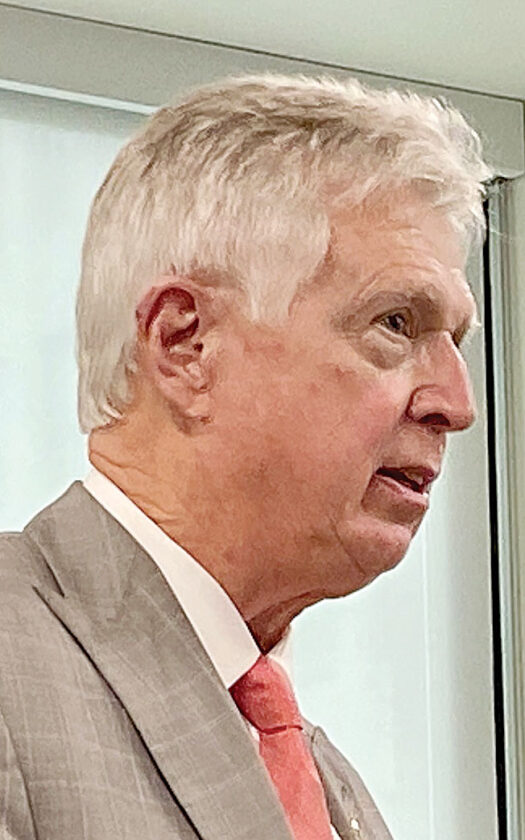
Roach
CHARLESTON — In an attempt to address disparities in the reading and math scores of West Virginia’s student that were already below standards and made worse by COVID-19, State Superintendent of School David Roach released a plan to reverse these trends.
Roach briefed members of the West Virginia Board of Education during their monthly meeting Wednesday in Charleston.
The first part of Roach’s plan will focus on improving literacy rates among West Virginia students, calling the initiative “Ready, Read, Write West Virginia.”
“This approach is simple: prioritize reading, writing, and math at the elementary level to build a solid foundation for our youngest learners,” Roach said. “At the secondary level, we will continue to build and advance skills in reading and math to ensure students can confidently pursue additional educational opportunities or enter the workforce or military upon graduation. As immediate first step, the West Virginia Department of Education is focused on the critical need to improve literacy among our students.”
The National Assessment of Educational Progress (NAEP) released its 2022 Report Card in October. The NAEP assessments report out math and English Language Arts (ELA) results based on average scores ranging from zero to 500.
In West Virginia, fourth graders during the 2021-2022 school year scored 226 in math, six points below 2019 scores. Eighth graders scored 260 in math, 12 points below 2019 scores. In reading, fourth graders scored 205, eight points below 2019 scores, while eighth graders scored 249, six points below 2019 scores.
West Virginia’s own summative assessments released in September also showed that students in the state took a big hit in learning during the COVID-19 pandemic, adding to already below-average test scores. The Balanced Scorecard looks at multiple factors, including test scores from the annual statewide assessment in grades three, eight, and 11.
The Balanced Scorecard for the 2021-2022 school year last year showed that 53.9% of West Virginia students were proficient in ELA, a three-point improvement from the 2020-2021 school year as schools were dealing with shutdowns and remote learning due to the spread of COVID-19. But it was three points below the 2018-2019 school year, when 56.9% were proficient in ELA.
Only 48.8% of students tested were proficient in math during the 2021-22 school year, nearly five points up from 44% during the 2021 school year, but down nearly five points from 53.5% during the 2019 school year. No statewide summative assessment was offered during the 2019-2020 school year after schools were shut down when the pandemic first hit the state in March 2020.
State Board of Education President Paul Hardesty, who began his leadership position earlier this summer, has made improving ELA and math scores a top priority.
“I have been on a soapbox ever since I’ve been in this seat about reading,” Hardesty said. “What we are trying to do is go back to the basics … Our kids can’t read. That’s the reason for our outcomes.”
Hardesty commissioned Roach, who became state superintendent shortly after Hardesty’s ascension to board president, to begin work on a program to focus on the fundamentals. Roach has also been working with state Senate Education Committee Chairwoman Amy Grady, R-Mason, who works as a school teacher.
Roach said “Ready, Read, Write West Virginia” will focus on the science of reading, phonetic awareness and fluency, vocabulary, and reading comprehension.
“We know it all begins with literacy, and students who cannot read become adults who struggle to succeed,” Roach said. “Literacy and reading have an immeasurable impact. The ability to read is something many people take for granted, but for the educator we see firsthand the results that manifest in the lives those who cannot read at all or at inadequate levels.”
Roach said efforts are underway to work to recruit, support and retain teachers and principals, adding pathways for teachers to become certified, increasing professional growth and leadership opportunities, and working with teachers on advancing training on strategies technologies to help focus on the science of teaching reading and math.
“Our focus on literacy is more than words,” Roach said. “It must be a part of our culture as a Department of Education.”
Local News

Can West Virginia Follow the UAE’s Lead into a Green Future?
Local pastor facing felony charge
ELKINS — A local pastor is facing felony charges after allegedly selling vehicles to customers that were under ...
Community Service Day
Trump administration to invest W.Va. coal-fired power
CHARLESTON - Gov. Patrick Morrisey and other West Virginia leaders praised President Donald Trump Thursday for ...
Snyder selected as Maid Silvia for the 88th Mountain State Forest Festival
ELKINS – Hambleton resident Miss Emma Grace Snyder has been selected as Maid Silvia for the 88th Mountain ...
Capito provides update on border security funding, NIL reform
CHARLESTON – U.S. Sen. Shelley Moore Capito provided an update Thursday on a number of issues being addressed on ...