
Community Conversation on Domestic Violence offered
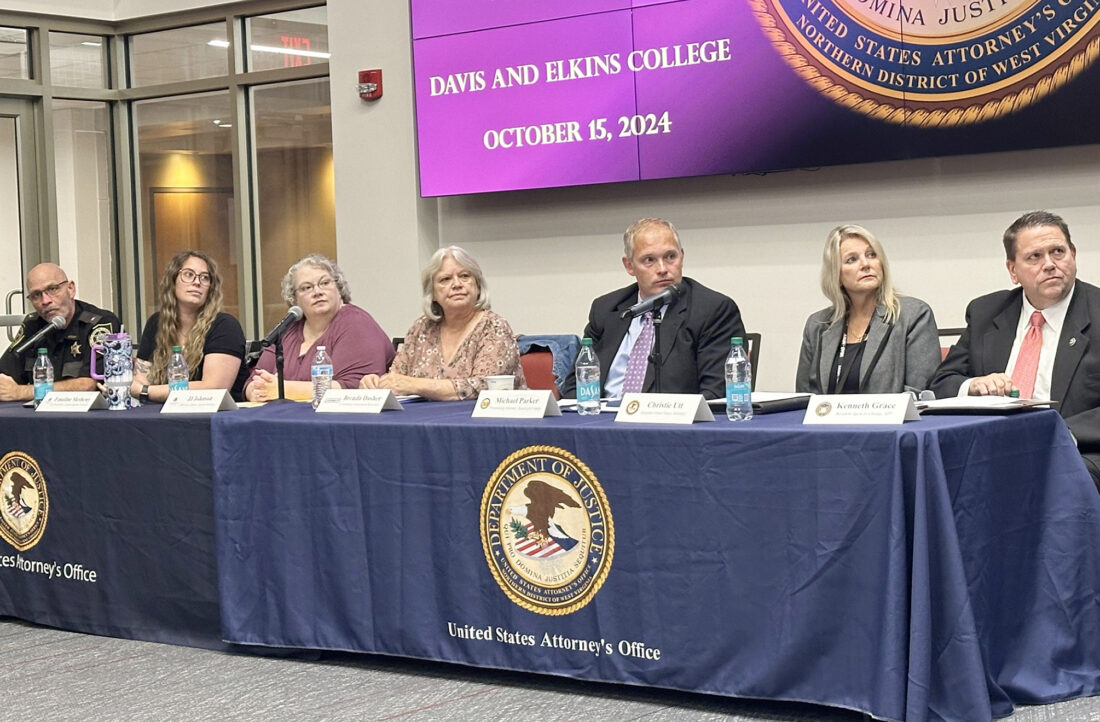
The Inter-Mountain photo by Taylor McKinnie Randolph County Sheriff Rob Elbon, Center Against Violence DV Specialist Emaline Metheny, Center Against Violence Director J.J. Johnson, LiveAbility Community Integration & IL Skills Manager Brenda Dasher, Randolph County Prosecuting Attorney Michael Parker, Assistant U.S. Attorney Christie Utt and Bureau of Alcohol, Tobacco, Firearms and Explosives Regional Leader Kenneth Grace were all on the Community Conversation on Domestic Violence panel Tuesday night.

Ihlenfeld
The Inter-Mountain photo by Taylor McKinnie Randolph County Sheriff Rob Elbon, Center Against Violence DV Specialist Emaline Metheny, Center Against Violence Director J.J. Johnson, LiveAbility Community Integration & IL Skills Manager Brenda Dasher, Randolph County Prosecuting Attorney Michael Parker, Assistant U.S. Attorney Christie Utt and Bureau of Alcohol, Tobacco, Firearms and Explosives Regional Leader Kenneth Grace were all on the Community Conversation on Domestic Violence panel Tuesday night.
Ihlenfeld
Trending
ELKINS -- Davis & Elkins College hosted a Community Conversation on Domestic Violence Tuesday evening with panelists from the U.S. Attorney's Office, Centers Against Violence, the Randolph County Sheriff's Office and more.
The event, which was held at the Senate Commons in D&E's Myles Center for the Arts, saw more than 30 students, faculty and community members in attendance and covered a wide range of topics, such as how to break the cycle of domestic violence, the biggest barriers to victims accessing safety, and the role played by state and federal courts.
"This is important in every community," U.S. Attorney William Ihlenfeld, II, who moderated the event, told The Inter-Mountain beforehand. "Domestic violence exists in every community. Sexual violence exists in every community. So, it's important that we talk about these issues and make sure as many people as possible know."
According to BreakTheCycle.org, in the United States, "nearly every one in two women and more than two in five men reported experiencing intimate partner violence at some point in their lifetime," and every minute 32 people in the country experience intimate partner violence.
Randolph County Sheriff Rob Elbon said during Tuesday evening's event that domestic violence calls made up 4% of the calls made to the Sheriff's Department last year, and 11% of last year's arrests.
The panelists included Elbon, Centers Against Violence DV Specialist Emaline Metheny, Centers Against Violence Executive Director J.J. Johnson, LiveAbility Community Integration & IL Skills Manager Brenda Dasher, Randolph County Prosecuting Attorney Michael Parker, Assistant U.S. Attorney Christie Utt, and Bureau of Alcohol, Tobacco, Firearms and Explosives (ATF) Regional Leader Kenneth Grace.
Each panelist began by describing their roles in combating domestic violence. Parker, Utt and Grace explained how their offices work together on both the state and federal levels.
"If I speak to Ms. Utt or Mr. Ihlenfeld and determine that it would be better for law enforcement, a better resolution for everybody to prosecute in federal court, I don't believe I've ever had a problem with them adopting a case out of Randolph County," Parker said.
When asked how the cycle of domestic violence can be broken, Johnson said that even having an open conversation about domestic violence is a step in the right direction.
"For years it was something that was not talked about outside of the home and we're getting to a place now where we're talking about it, but we need to continue to talk about it," Johnson said. "My personal statement in this... I want people to get pitchfork mad... because we get sad about it and it's 'sad.' I want people to stop being sad and I want people to be angry. I want people to stand up against it and to voice and say 'You have support. You're not alone.'"
Metheny added, in the case of the abuser, there are not many options for counseling or programs to help break the cycle in Randolph County outside of the WV Batterer Intervention & Prevention Program (BIPP) and a future community corrections program for female batterers. Metheny said there have been many times that anger management was suggested as part of an abuser's sentencing, which she says never helps.
"Which is the worst possible thing in the world that you can do for a batterer," Metheny said. "They are a professional at controlling their anger and using it when it is appropriate."
Dasher discussed the challenges people in violent situations face when it comes to escaping, such as lack of transportation, lack of financial stability, the safety of children and the lack of belief or support they may get from others, especially male victims of abuse.
Ihlenfeld said officials would like to hold more Community Conversations on Domestic Violence, noting the one held in Martinsburg recently was very well-received. He said officials would like to set one up in Clarksburg next and then Wheeling.
"We have really good shelters and advocates that all fall under what's known as the West Virginia Coalition Against Domestic Violence," Ihlenfeld said. "It's important to raise awareness about the fact that those resources exist, what people might be able to take advantage of when it comes to those resources."
To contact Centers Against Violence, which covers Randolph, Tucker, Barbour and Upshur counties, call 304-636-8433. If you live in Pocahontas County, you can contact the Family Refuge Center at 304-645-6334.