
Trending
CHARLESTON -- For the second time during the tenure of Gov. Patrick Morrisey, West Virginia has ended a fiscal year with surplus tax collections that will cover certain one-time expenses with money left over.
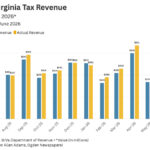
According to the state Department of Revenue, the state’s general revenue budget ended fiscal year 2026 Tuesday with $5.693 billion in tax collections, 6.6% more than the $5.323 billion revenue estimate set by the department. End-of-fiscal year collections provided the state $370 million in surplus collections.
"When you focus on the fundamentals and exercise fiscal discipline, we put West Virginia in a position to end the fiscal year strong as revenues continued to outpace our projections," Morrisey said in a statement Wednesday.
The $370 million surplus will cover the $245 million in appropriations placed in the surplus section of the fiscal year 2027 general revenue budget that began Wednesday, leaving $125 million in unappropriated surplus collections for FY28. Items in the surplus section are paid out in the order they appear based on how much surplus is available at the end of the fiscal year.
Items in the surplus section of the FY27 budget include a $60 million appropriation for the Hope Scholarship to supplement the $117 million FY27 general revenue budget appropriation for the program, $20 million in carryover funds already available through the State Treasurer's Office, and $100 million in supplemental appropriations, fully funding Hope through FY27 and the first quarter of FY28 at $297 million.
Other surplus appropriations include; $250,000 for the Lily's Place substance use treatment program in Cabell County, $100,000 for the Willow Bend Agricultural Innovation Center in Monroe County, $5 million for Glenville State University, $30 million for the West Virginia Infrastructure and Jobs Development Council, $10 million for the Abandoned and Dilapidated Property Program Fund, $125 million for road and bridge maintenance, $10 million for the Neighborhood Access Road Fund and $5 million for the Flood Resiliency Office Trust Fund.
"Because of our significant surplus, we will fund every obligation in the back of the budget, including $125 million for roads and infrastructure, fully fund the Hope Scholarship, and other important priorities,” Morrisey said.
June tax collections for FY26 of $569 million were 6.6% more than the $512.6 million revenue estimate, adding more than $56 million to the $370 million surplus. This was largely driven by the largest percentage of general revenue fund collections: the state’s personal income tax.
June personal income tax collections of $237 million were more than 25% above the $188.2 million revenue estimate for a nearly $49 million surplus. FY26 personal income tax collections of $2.179 billion were 7.9% above the nearly $2.020 billion revenue estimate, adding $159 million to surplus totals. Personal income tax collections represented 38% of total tax collections for FY26 and nearly 43% of total FY26 surplus collections.
Morrisey sought a 10% total cut in personal income tax rates during the most recent legislative session retroactive to Jan. 1. The Legislature only agreed to pass a bill cutting personal income tax rates by 5%, which will return approximately $125 million to taxpayers when fully implemented.
This is the fourth time personal income tax rates have been cut in West Virginia since 2023 and the first time under Morrisey -- two times by legislative action and one time due to a formula put in place after 2023 during the final term of former governor Jim Justice.
FY26 consumer sales and use tax collections of $1.952 billion were 2.2% above the $1.911 billion revenue estimate, adding $41.4 million to surplus totals. June sales tax collections of $183 million were 2.4% more than the $178.6 million estimate, providing $4.4 million in surplus tax collections for the month.
FY26 severance tax collections on coal, natural gas and oil were $534.3 million, or 34.3% more than the $398 million revenue estimate, adding $136.3 million to the end-of-fiscal-year surplus. June severance tax collections of $63 million were 89% more than the $33.3 million revenue estimate for a nearly $30 million surplus for the month.
Of the state’s four major drivers of general revenue fund collections, only the corporate net income tax underperformed both for June and for FY26, coming under June estimates by $8 million for $41 million in monthly collections and also coming in under FY26 collections by $8 million for $305.5 million in collections.
As is traditional at the beginning of a new fiscal year, Morrisey issued an executive order June 29 allowing the state to use monies from the Revenue Shortfall Fund, also known as the Rainy Day Fund, to allow the state to pay bills until tax collections for the first two months of FY27 catch up. The borrowed funds are repaid to the Rainy Day Fund within 90 days. As the end of May, the Rainy Day Fund had more than $1.461 billion.
Heading into August, the Department of Revenue will work with state departments and agencies to craft the budget bill for fiscal year 2028, which lawmakers will consider during the 2027 legislative session and will go into effect on July 1, 2027. Last year, departments and agencies were asked to cut their budget requests by 2%. Morrisey hinted at the possibility of another request for a cut in personal income tax rates next year.
“Our next budget will aggressively fund education, foster care, infrastructure, law enforcement, and other key initiatives while providing tax relief to our citizens,” Morrisey said.