
This Week in WV History
Trending
CHARLESTON - The following events happened on these dates in West Virginia history. To read more, go to e-WV: The West Virginia Encyclopedia at www.wvencyclopedia.org.
July 12, 2003: The Clay Center for the Arts & Sciences in downtown Charleston opened to the public. It combines a modern performing arts center with a visual arts museum and an interactive science center.
July 13, 1861: The Battle of Corricks Ford took place in Tucker County. Confederate Gen. Robert S. Garnett was killed. He was the first Confederate general killed in the Civil War.
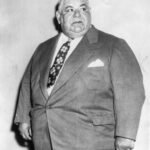
In 1900, gangster William George "Big Bill" Lias was born in either Wheeling or Greece.
July 14, 1861: Union troops under Gen. Jacob Cox drove Confederate militia and cavalry out of town during the Battle of Barboursville. Union forces remained in control of Barboursville for the remainder of the war.
July 14, 1900: Gangster William George "Big Bill" Lias was born in either Wheeling or Greece. From the 1920s until his death in 1970, he was recognized as the leading organized crime figure in Wheeling.
July 15, 1886: Congressman Cleveland Monroe "Cleve" Bailey was born on a farm in Pleasants County. He represented West Virginia's third congressional district for eight terms in the U.S. House of Representatives, 1945-47 and 1949-63.
July 15, 1915: The West Virginia Folklore Society was founded in Morgantown by John Harrington Cox, Robert Allen Armstrong and Walter Barnes.
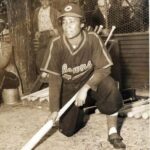
In 1921, Marcenia "Toni" Stone was born in Bluefield, the first woman to play professional baseball for a previously all-male team.
July 15, 1988: Interstate 64 was completed when the final section between Sam Black Church and the West Virginia Turnpike was opened to traffic.
July 16, 1791: Adam Stephen, a physician and Revolutionary War general often credited as the founder of Martinsburg, died at his home in that city.
July 16, 1869: Philanthropist Michael Late Benedum was born in Bridgeport. He made a fortune in the oil and gas business but is best remembered for establishing the Claude Worthington Benedum Foundation.
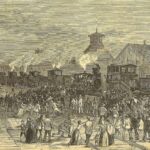
July 16, 1877: The first nationwide labor strike in U.S. history began in Martinsburg, after the Baltimore & Ohio Railroad cut worker's wages. Federal troops soon put down the violence in Martinsburg, but the strike continued across the country for another 52 days.
July 17, 1775: Two months after the Revolutionary War started, Hugh Stephenson’s 98-man rifle company left Shepherdstown, marched 600 miles in 24 days and arrived in Cambridge to help defend Massachusetts.
July 17, 1861: The Battle of Scary Creek took place in Putnam County. It was one of the earliest battles of the war and one of the first Confederate victories.
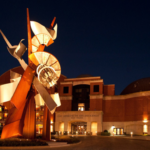
In 2003, the Clay Center for the Arts & Sciences in downtown Charleston opened to the public.
July 17, 1914: Singer Eleanor Steber was born in Wheeling. She made her debut with the Metropolitan Opera in 1940.
July 17, 1921: Marcenia "Toni" Stone was born in Bluefield. She was the first woman to play professional baseball for a previously all-male team. In 1953, she joined the Indianapolis Clowns of the old Negro American League, replacing the team's second baseman, Hank Aaron, who had just joined the National League's Milwaukee Braves.
July 17, 1922: The Cliftonville Mine Battle took place east of Wellsburg, Brooke County. The gun battle between striking miners and sheriff's forces left at least nine people dead.
July 18, 1776: Methodist bishop Francis Asbury first set foot in present West Virginia outside of Berkeley Springs. He worked extensively in what is now the Eastern Panhandle, preaching and lecturing almost every day, before continuing farther into western Virginia.
July 18, 1865: Samuel Cabell was murdered at his Institute plantation by either pro-Union or pro-Confederate sympathizers, depending on the source. His widow and mother of his children, Mary Barnes Cabell, who he had previously enslaved, inherited all his property, including the land on which today's West Virginia State University was founded in 1892.
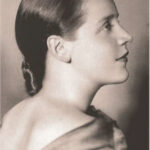
In 1914, singer Eleanor Steber was born in Wheeling. She made her debut with the Metropolitan Opera in 1940.
July 18, 1893: Spencer State Hospital opened. With its connected brick buildings, a quarter-mile in length, the hospital was sometimes referred to as the longest continuous brick building in America. It remained in operation until June 1989.
e-WV: The West Virginia Encyclopedia is a project of the West Virginia Humanities Council. For more information contact the West Virginia Humanities Council, 1310 Kanawha Blvd. E., Charleston, WV 25301; (304) 346-8500; or visit e-WV at www.wvencyclopedia.org.