
Trending
ELKINS -- A Randolph County man charged with possessing inappropriate material of a minor and giving that same minor methamphetamine received the maximum prison sentence Wednesday.
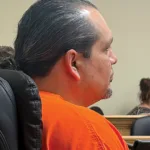
Pete Rameriz Perez, 46, of Valley Head, was sentenced by Randolph County Circuit Judge Jaymie Wilfong to no less than two, and no more than 10 years of incarceration for pleading guilty to one count of possession of material depicting a minor engaged in sexually explicit conduct, and also to no less than one, and no more than 15 years of incarceration for one count of delivery of a controlled substance to persons under the age of 18, both felonies. The two sentences will run consecutively.
As part of his sentence, Perez will not be eligible for parole for five years, with his total sentence being no less than three, and no more than 25 years of incarceration. He will also be required to register as a sex offender for life and, once out of prison, will be under extended supervised probation for 50 years. During the extended supervised probation, Perez is to not have any contact with the victim, or with any child under the age of 18.
In June, Perez pleaded guilty to the two charges. He was initially indicted in October by a Randolph County grand jury on one count of soliciting a minor via computer, one count of possession of material depicting a minor engaged in sexually explicit conduct, one count of employment or use of a minor to produce obscene matter or assist in doing sexually explicit conduct, and two counts of delivery of a controlled substance to persons under the age of 18, all felonies. He was also indicted on two counts of child abuse creating risk of injury, a misdemeanor.
During his sentencing hearing Wednesday, Perez was represented by attorney Brent Easton. The state was represented by Assistant Randolph County Prosecutor Christina Harper.
At the hearing’s start, Wilfong noted that a sex offender evaluation of Perez had been conducted, and that the court had received a written victim impact statement from the juvenile victim, who was 15 years old when the crimes occurred.
Harper said she didn’t believe there was much she could say that would be “more impactful” than what the victim wrote in their statement. She said that Perez violated a “very sacred trust” with what he did to the victim, and that the relationship was “wholly inappropriate and abusive.” Harper recommended that Perez receive the maximum sentence.
In his remarks, Easton asked the court to suspend any sentence Perez could receive for probation instead of prison time, along with implementation of a treatment plan laid out by the doctor who performed Perez’s sex offender evaluation. He stated that Perez had accepted responsibility for his actions and that his time in jail had been “productive.”
Easton informed the court that, during Perez’ 14 to 15 months in jail, Perez was baptized and had performed 195 learning hours with 85 courses, a majority of which was religion-based. He noted that, in the sex offender evaluation, it stated that the doctor found “an absence of sexual deviance” and “the presence of an anti-social personality,” ultimately determining that Perez was a good candidate for community placement with “low risk” of re-offending.
Perez also addressed the court, apologizing to the victim and to his parents. He told the court he had “no excuse” for his behavior and that he had been prioritizing his self-improvement while in jail. Perez said he had been “called” to ministry and that the man the court saw that day was not the same man who was arrested 14 months ago. He advised the court that, however he was sentenced, he accepted responsibility and that he felt “blessed.”
As she sentenced Perez, Wilfong noted that she appreciated Perez took responsibility “to some degree,” but stated that she did not believe he was taking full responsibility as, in his pre-sentence investigation report, Perez claimed that he gave the juvenile meth to “keep (the victim) warm” and that he knew there was nude material of the juvenile on his device. She also noted that the victim had stated that they had been blackmailed by Perez for the inappropriate material.
“You put your own needs, desires, whatever you want to call it, in front of the life of (the victim),” Wilfong said during the sentencing. “Someone that you should have been looking out for.”
Wilfong also acknowledged Perez’s work in ministry while in jail, but stated that it was “not relative at all” to the crimes, except that, if Perez were to get out of prison and begin a church, he will “never minister to a child.” In regard to the 50 years of extended supervised probation, Wilfong told Perez that she hoped “it’s in effect up until the day you pass because it will prohibit you from ever having contact with children again.”
During a preliminary hearing in Randolph County Magistrate Court in June 2025, Sgt. Daniel Burge with the West Virginia State Police testified that the case against Perez started off as a missing person’s complaint filed on May 8, 2025, where police were informed that a missing 15-year-old had been last seen with Perez. Burge explained that while the victim had permission from their mother to go on a four-wheeler ride with Perez around 4:30 p.m. on May 7, they were supposed to return before 9 p.m. However, Burge explained that police were told that the alleged victim and Perez had “been out the entire night.” The victim was not reported missing until 11 a.m. the next day, Burge said.
After the victim was found, Burge explained that they began acting “really odd” and was taken by ambulance to Davis Medical Center, where the victim tested positive for THC and methamphetamine. Burge told the court the victim stated that Perez had given them marijuana on multiple occasions, and Perez had let the victim smoke from his meth pipe the night they went missing.
The victim was given a CAC interview, Burge said, and during that interview, the victim stated that Perez had been “blackmailing (them) for some time” to send inappropriate videos and photos of themselves to him. Burge said the photos and videos were sent through phones over the internet. The photos and videos were found through a search warrant to the social media messaging app Snapchat. Burge said police were able to determine the videos and photos were sent to Perez.
Burge said that, while he could not recall if Perez admitted during a Mirandized interview to giving the alleged victim the drugs that were found in their system, Burge did recall that Perez admitted that he “knew the pictures and videos (were) on his phone.”