
Trending
ELKINS -- After a two-day preliminary hearing, probable cause was found in the case of a former City of Elkins employee accused of threatening the mayor and President Donald Trump.
Christopher Benjamin "Ben" Curtis, 44, is charged with threats of terroristic acts. He is currently being held at the Tygart Valley Regional Jail with no bond.
Curtis appeared in Randolph County Magistrate Court on Wednesday and Thursday for a preliminary hearing. After more than five hours of witness testimony on Wednesday, the hearing was continued until Thursday morning. After almost 30 minutes of closing arguments on Thursday morning, Magistrate Tracy Harper found probable cause for the case to go forward. Curtis’ case will now be brought before a Randolph County grand jury for consideration.
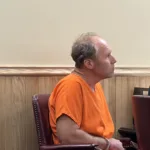
Curtis
During the hearing, Assistant Randolph County Prosecutor Leckta Poling separately called to testify City of Elkins Assistant Water System Technician Supervisor Douglas “D.J.” Shoulders, the city’s Public Water System Chief Operator and Manager Wesley Lambert, and the city’s Human Resource Generalist Sarah Campbell to testify. All three were witnesses to the alleged threats Curtis made against Elkins Mayor Jerry Marco and Trump.
In their testimonies, all three explained that, on July 8, it was decided that Curtis was to be terminated from his position at the City of Elkins Water Department due to previous issues with how he incorrectly filed official work order forms using unknown symbols, and also issues of harassment toward city employees in the billing department. Curtis had begun working with the City in November 2025.
Shoulders and Lambert both testified that they had no issues with Curtis until around three weeks before the July 8 incident, both describing him as a hard worker. Shoulders, Lambert and Campbell said they met with Curtis outside the Elkins Water Plant on High Street around 1:15 p.m. on July 8 to inform him he was being let go.
Campbell said she handed Curtis a packet and informed him of his termination, but he refused to sign the packet. Lambert told the court that Curtis appeared to take a step back, processing what Campbell just told him, before becoming “really upset.” Shoulders described Curtis’ behavior after being fired as “irate.”
All three recalled Curtis was moving his personal tools from a work vehicle to his truck when the alleged threats began. Among profanities and comments about Trump, all three said they saw Curtis grab a pipe wrench and act like he was “splitting the president’s head.” The three of them also heard Curtis turn his angry comments toward the mayor, saying that Marco was a friend of his and then calling Marco “a marked man.” Both Shoulders and Lambert said they had never seen Curtis behave or speak this way before. All three witnesses said their interaction with Curtis on July 8 lasted between 15 to 25 minutes.
Though both Shoulders and Lambert said they did not feel scared by Curtis’ reaction, Campbell told the court that she stepped behind Shoulders when Curtis held the pipe wrench over his head. Shoulders also testified to Campbell moving behind him, and he admitted that he was worried about what Curtis might do. Lambert also told the court that, as he left the Water Plant, Curtis shook their hands and told Campbell, “I don’t blame you, you’re just the messenger. However, Lucifer’s going down.” Lambert called the incident “off the wall.”
After Curtis left the Water Plant, Lambert called Marco to inform him of what happened, and all three witnesses went to the Elkins Fire Department to give statements on what they observed. The Elkins Fire Department is currently the temporary home of the Mayor’s Office, as Elkins City Hall has been closed for restoration and recovery work since Aug. 31, 2024, after a sewage overflow incident flooded the building’s basement and first floor.
The three witnesses said that, when they arrived, an Elkins City Police officer was present, and they were later joined by officers with the Randolph County Sheriff’s Office, who also heard their statements.
Lambert also told the court that, as he and Shoulders were leaving around two hours later, they observed Curtis arrive at the Elkins Fire Department. He said that Curtis attempted to get in through the front door, but when he found it to be locked, he entered through the department’s open bay area. There, Curtis was met by an officer with the Sheriff’s Office. Campbell also testified that Curtis appeared at the Fire Department, but she did not witness it in person as she was in another room.
In cross-examination of all three witnesses, Curtis’ attorney, Ty Nestor, questioned them about a voicemail Curtis had sent to Marco’s office that had been forwarded to Lambert and Shoulders, and then played back to Curtis two days prior to his termination. Both Lambert and Shoulders confirmed this happened.
Nestor asked about Curtis’ work ethic, and Lambert and Shoulders said he was dedicated. Nestor asked all three if, after he was fired, Curtis ever said, “God bless you,” that he was “grateful for the opportunity,” and “if you all don’t want me here, I’ll leave.” All three witnesses said he did. Nestor also asked if Curtis demanded his job back, if he said “if X doesn’t happen, I’ll do Y,” or if he made threats directed specifically at them or against the city as a whole. All three witnesses said he did not. The three of them also told the court that they were not the ones who contacted law enforcement about the incident.
Poling’s last witness was Deputy Connor D. Waldron of the Randolph County Sheriff’s Office, who is the investigating officer in this case. Waldron said that, on July 8, he was dispatched by 911 to the Elkins Fire Department in regard to threats. When he arrived, Waldron spoke with Marco and the three witnesses about what happened and took written statements from the three of them. Waldron also said he received a later statement from another City employee who had an interaction with Curtis at the West Virginia Wood Technology Center, where the City of Elkins Treasurer’s Office is currently housed, after Curtis was fired.
Waldron said that, after a warrant was issued for Curtis’ arrest, Curtis was found by law enforcement in Grant County with three firearms and a bulletproof vest in his vehicle. The deputy also said a video on Curtis’ public Facebook account featured Curtis showing off a handgun and saying he could “kill the president at any time.”
In cross-examination, Nestor questioned why exactly Waldron charged Curtis with threats of terroristic acts, why the City of Elkins shut down its offices after the incident with Curtis, and why Waldron did not put what Curtis said during an interaction with Chief Deputy Bradley Sharp into his criminal complaint about the incident. While Waldron was on the stand, Nestor and Poling debated the section of West Virginia code regarding threats of terroristic acts.
Nestor called Sharp as his first witness for the defense. Sharp said he had responded to the Fire Department with Waldron after the Elkins City Police requested assistance regarding threats. While Sharp was speaking to the firefighters on site, Curtis appeared in the building and approached Sharp. Curtis asked Sharp if he could speak to the mayor, as he had a message for him, and when Sharp asked what the message was, Curtis said, “Would Jesus have sent three people up that hill to fire someone?”
Sharp said he did not know at the time that Curtis was the suspect. When Sharp asked Curtis who he was, Curtis allegedly said he could be referred to as “The Messenger.” When Nestor asked if Sharp took Curtis’ message as threatening, he said no, but he did tell Waldron about the interaction.
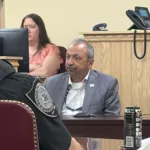
Marco
Nestor then called Marco to testify before the court. Marco stated that he knew Curtis from church and from his time as a City of Elkins employee. When Nestor asked if Marco considered Curtis a friend, Marco said Curtis was “an acquaintance at best.”
Marco said that, prior to the July 8 incident, Curtis had left a voicemail with his office to complain about feeling threatened after Shoulders asked him to attend a meeting, only to retract that complaint not long after. Marco confirmed that he spoke to Lambert about the voicemail to find out what was going on.
Nestor asked how Marco knew about Curtis’ firing and the threats. Marco said that Lambert called him to let him know what had happened at the Water Plant when Curtis was fired. Marco said it was not his decision to fire Curtis, as he leaves that up to the departments.
When Nestor questioned why Marco shut down City of Elkins offices after Curtis called him “a marked man,” Marco said he made that decision after the Sheriff’s Office determined that what Curtis said was “a viable threat.” Marco said he was the one who called the Sheriff’s Office to investigate, as he is not one to “take any threat lightly.”
Nestor continued to question why Marco shut down city offices, and Marco said he had been “taking precautions to protect (his) employees and (he) would do that again.” Nestor then asked why Marco thought any other city employee was in danger. Marco said it was because Curtis appeared at the Treasurer’s Office and told one of the employees that her response to him was “the correct answer” and that he was “there to cleanse the city of people.”
In cross-examination, Poling asked when Curtis went to the Treasurer’s Office. Marco said it was on July 8 after he was fired. Poling then asked if it was safe to say that Curtis had been fired due to interactions with other employees, and Marco said that’s what he had been told about Curtis’ termination.
Poling also asked if City Executive Secretary Mikayla Goins had any concerns about Curtis. Marco said yes, as there had been an uncomfortable interaction between Curtis and Goins at the Fire Department prior to Curtis being hired by the City.
In an unusual move, Nestor’s final witness was Curtis himself.
Curtis gave the court a similar account of his termination on July 8, but said he was slightly relieved, as the work had been “very taxing.” He explained that his anger stemmed from him not understanding why he had been fired, as he had put his “heart and soul” into the job.
Curtis said that he was especially confused because he had just spoken to Marco, who he considered a friend, at church three days prior to July 8, and when he told Marco he was doing a great job, Marco told Curtis he and the whole Water Department were also doing a great job. Curtis said, after being fired, he considered Marco to be a hypocrite and that’s why he called him “a marked man.” Curtis said his anger was more toward the situation than toward Marco and Trump, and that he “kind of blanked out” when he reportedly made threats about Trump.
After leaving the Water Department, Curtis said he went to the First Baptist Church and spoke with the pastor there for around two hours. When Nestor asked if Curtis spoke to the pastor because he thought he might hurt someone, Curtis said “absolutely not.” He said he went there for guidance and told the pastor, “Even though they don’t deserve it, I forgive them.”
Curtis confirmed that he did go to the Fire Department to speak with Marco, wanting to get clarity on his firing. Curtis also confirmed calling himself “The Messenger” and that he told Sharp to tell the mayor, “Would Jesus have sent three people up that hill to fire someone?”
When Nestor asked about the weapons and vest found in Curtis’ vehicle in Grant County, Curtis said he was on his way to visit his uncle in Oakland, Maryland when he was stopped by police. He said he always keeps those firearms in his vehicle in case of emergencies, or in case he needed to assist police with his military training.
In cross-examination, Poling asked why Curtis went to the Treasurer’s Office after being fired. Curtis said he wanted to see if they had something to do with his firing, so when he asked for work orders and the employee said they didn’t have any for him right now, he said he was “just testing” her because that meant she knew nothing about his termination. He said he told the employee “I guess they’re mad because I gave everyone a chance to repent.”
After Curtis’ testimony, Harper continued the hearing to the next day, Thursday, Sept. 3. The next morning, during closing arguments, Poling asked the court to find probable cause against Curtis based on all the testimony the court had heard the day before. She said the definition of threats of terrorist acts under West Virginia code was “likely to result in serious bodily injury, or damage to property or the environment and can include four different components,” and what Curtis did on July 8 fit this definition.
In his closing arguments, Nestor stated that, while Curtis did make those angry comments, it was “silly” for the state to be arguing that what Curtis did constitutes a charge of threats of terrorist acts. Nestor called the charge against Curtis “disgusting,” and he brought up Curtis’ lack of a criminal history and his career in two military branches, being honorably discharged from both. Nestor also argued that threats against an individual government representative do not constitute threats against a whole government or the public at large. He said it was concerning that the state would ruin Curtis’ life “just because somebody’s ego’s bruised.”
Also on Wednesday, the matter of Curtis’ bond was discussed twice, once in an “emergency bond modification” hearing before Randolph County Circuit Court Judge Jaymie Wilfong, and again during a bond revocation hearing in Randolph County Magistrate Court before the preliminary hearing.
Nestor informed Wilfong that, a few days prior to the hearings, Curtis, who had been on electronic monitoring, had been taken into custody again after his electronic monitoring device was found to not be charged. After some back and forth on the matter of Curtis’ bond and possible re-release, Wilfong asked Nestor to write an order that would have Curtis, once out again, check in with Community Corrections three times week, as he initially had been prior to being placed on electronic monitoring.