
Trending
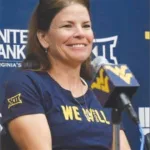
MORGANTOWN -- Nikki Izzo-Brown, West Virginia’s women’s soccer coach since the sport was introduced at the school in 1996, calls herself a “unicorn” and it is wonderful self-image for anyone to have.
In its mythological sense a unicorn is defined as “the symbol of purity, grace and things that are hard to find” and in this day and age, it isn’t easy to find anyone who is two weeks from embarking on their 31st season as West Virginia’s women’s soccer coach, the only coach the program has ever had.
Think of that for a moment and take yourself back not 30 years ago when she was hired, but in today’s world, where as much time and effort is put into the buyout put into a coach’s contract as is spent on the terms he or she will operate under while still employed.
In those 30 years, Izzo-Brown has had one losing season, and considering she has built the program from the ground up that may be more rare than even the mythical unicorn with the single horn growing out of its head.
“I’m a unicorn,” she said, perhaps labeling herself with a nickname -- Nikki “The Unicorn” Izzo-Brown -- that will last a lifetime just two weeks shy of her season opener at home against Dayton on Aug. 13. “There’s strengths to going to new places and coaching in new places, but there’s strengths to staying, too, and the one thing you can’t deny here at West Virginia is consistency.
“I’ve loved this opportunity and every time things do change, we’ve had to adapt and embrace it. I love those challenges … rev share, roster, portal, eligibility. All this new stuff just made things more challenging but exciting.”
Consistency had long been a strength of the West Virginia athletic department. Think about it for a moment:
Craig Turnbull coached wrestling and Linda Burdette coached gymnastics at the school for 36 years, Steve Harrick had coached baseball and wrestling for 29 years, Dale Ramsburg had coached baseball and Martha Thorn coached tennis for 27 years while Gale Catlett coached men’s basketball for 24 years, Ira Errett Rodgers coached football for 23 years, Mike Carey coached women’s basketball for 21 yeas and Don Nehlen coached football for 20 years.
The list is long, Art Smith coaching track for 30 years and Marty Pushkin for 21, Jon Hammond rifle now for 20 years.
Coaching at West Virginia was a career, not a job.
When you were named a coach at WVU you bought a house, didn’t rent, but things have been changing. As salaries have grown, so has accountability and when Bob Huggins was let go after coaching men’s basketball for 16 years, a parade of coaches began in that sport as well as in women’s basketball after Mike Carey.
Now, you have to win.
“Pressure is a privilege; we all know that,” Izzo-Brown said. “If you don’t make the NCAA Tournament, it’s like ‘Fire that old lady. If we don’t win a conference championship, my head is on a platter and my response to anyone is ‘Write me a check. I’ll get us there.'”
But winning the Big 12 in women’s soccer is far tougher now than when the program moved into the conference, soccer enjoying a boom time in what once was strictly football territory.
“I hope the women’s soccer fans can see the incredible young women who have come through here but also the hard work that people have put in to make it a successful program,” she said.
So much has changed since she finished her collegiate playing career ended at the University of Rochester in Rochester, N.Y., and she spent a year coaching at West Virginia Wesleyan College.
The Mountaineers were in the Big 12 then and had decided to add a women’s soccer program to its athletic department.
“I walked in, I didn’t even have an office,” she admitted. “I didn’t even have a pen to my name, so it’s been fun to see it grow into what I hoped for, a West Virginia family. I had to fund raise; we didn’t have a soccer facility so I had fund-raise for that.”
That wasn’t a complaint.
“I love the fact that every step of the way we had to earn everything and nothing’s been given,” she said. “Back at the start, I had to drive vans. I remember getting stuck in traffic in the Big Dig in Boston and asking, ‘Anyone got candy? Let’s eat.’
“Nowadays, coaches can’t drive. I ain’t driving to BYU, I’ll tell you that. But you can look at it many different ways. Our kids get to see many different landscapes, get to travel, get to see many different universities.”
She knows she wasn’t in it alone.
“It never takes one person. It’s taken some incredible people to build this; not only in the athletic department and the university but in the community and how it embraced women’s soccer,” she said.
“Hopefully, along with the men’s soccer team, we’ve been the flagship for soccer in our state. We’ve had 18 conference championship, 47 pros, Olympians, World Cup champions,” she said, not even bothering to add that 26 players had produced 61 All-American honors, 18 different players to 31 total Academic and Scholar All-America accolades, 24 conference players of the year and 23 Missouri Athletic Club (MAC) Hermann Trophy candidates. She also coached the 2016 Hermann Trophy award winner, the 2016 ESPN National Player of the Year, a pair of Olympic Gold and Bronze Medalists and FIFA Women's World Cup participants, as well as a FIFA Women's World Cup Best Young Player honoree.
As times change, so, too, do people -- coaches and players, to say nothing of the games they play.
“Here’s what I tell recruits, back in ’95, my whole philosophy was tough love, now I love tough. Have I changed? The way I look it is there are things that are non-negotiable, but some of that has changed because kids have changed.
“When you coach for 30 years -- three decades -- you have to adapt,” Izzo-Brown continued. “But you have to have certain standards that you will never negotiate.”
So how have things changed since the start for Izzo-Brown?
“Here’s a blanket statement: We’re not in the Big East anymore,” she answered. “Going from the Big East to the Big 12 was the first adjustment. That was exciting that we were able to go into a new conference when things were a little questionable. We were able adjust and adapt even though there were a lot of obstacles when we first entered that conference.”