
Trending
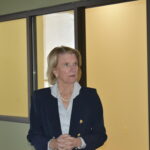
ELKINS -- U.S. Sen. Shelley Moore Capito sat down with The Inter-Mountain to talk about gas prices, broadband, data centers and more before West Virginians hit the polls on Tuesday.
In Tuesday’s primary election, Capito, R-W.Va., is seeking reelection for a third six-year term in the United States Senate. She said it’s important for first-time voters to look at the policies she’s worked on for West Virginia, both on the local and economic front. She also hopes that first-time voters will be interested in her relationships with West Virginia residents and her tenure as a two-term senator.
Capito was first elected to the Senate in 2014, making history as the first woman in West Virginia to be elected to the Senate. She was reelected in 2020. Before serving in the Senate, she represented West Virginia’s second district in Congress from 2001 to 2014.
“Most people know me,” Capito told The Inter-Mountain. “I think I have good trust with the voter. I listen to what West Virginians want and need, and I think with the positions that I hold now (in the Senate), chairmanships and other things, I can just be more effective for the state.”
Capito is the Chairman of the Senate Republican Conference, Chairman of the Environment and Public Works Committee, and Chairman of the Senate Appropriations Subcommittee on Labor, Health and Human Services.
On the economic front, Capito highlighted her support of the Working Families Tax Cuts Act, no tax on tips, no tax on overtime and no tax on social security. One of Capito’s main focus points for a third term is “making life more affordable for West Virginia families.”
When asked what she thinks can be done to lower rising grocery and gas prices, with the current average gas price in West Virginia being over $4.40 according to AAA, Capito said that she found the issue of higher gas prices to be “very troubling,” especially for families. She stated that she believes prices will go down once “the Iranian situation” is ended, but also that the U.S. needs to become more energy independent and the economy needs to grow.
“The situation in Iran obviously has a big impact there,” Capito said. “I think it shows us we need to be energy independent, which we are, but we still are subject to market forces internationally, and I think the President, when he brings the Iranian situation to an end, we’ll see prices come down. I think we’ve got to grow the economy. I know they just came out with economic numbers showing that we’re still growing. Jobs, over 100,000 jobs… this month, which I think is very helpful, but also more money back in tax payers’ pockets. Refunds are up 11%, and that’s meaningful, but we’ve got to get prices down.”
Capito has received the endorsement of both President Donald Trump and Vice President J.D. Vance. She described her working relationship with Trump to be “good,” stating that she has spoken with the president over the phone when needed and has worked well with his cabinet members, particularly those who focus on transportation in regard to Corridor H. Capito said she also has a “great relationship” with Trump’s Chief of Staff, Susie Wiles. Having served with Vance in the Senate, Capito noted she’s known the Vice President for years.
“I’m pleased to support the policies the President wants to put forward,” Capito said. “Especially on the economic and energy sectors.”
One issue on the minds of many West Virginians is when they can expect to see expanded broadband internet throughout the state. Capito said the Broadband Equity, Access and Deployment (BEAD) Program has taken almost five years to come out. The BEAD Program, once fully initiated, will provide $42.45 billion to expand high-speed internet access in all 50 states, Washington D.C., Puerto Rico, the U.S. Virgin Islands, Guam, American Samoa and the Commonwealth of the Northern Mariana Islands.
Capito called the delay on the program “ridiculous in terms of bureaucracy and bureaucratic malaise,” but noted that West Virginia’s plan for its BEAD funding has been approved.
“We’ve done a good job,” Capito said. “There will be a lot of fiber (optics), and it will connect the last house, the last business… The new plan only has like $600 million that’s being spent, but we’re allocated a billion and I’m advocating for us to keep that extra $400 million to hopefully build some more cell towers, update communications and infrastructure.”
Another matter that many West Virginians are beginning to face in their own backyard is the construction and operation of data centers, which house computer systems, telecommunications, storage systems and more. Those against data centers in the Mountain State argue that the facilities could cause environmental issues, health issues and higher electricity bills for local residents.
“We need data centers,” Capito said. “I think in the race to A.I., it is exceedingly important that we have the computer power to drive this because we’re in a competition with China right now. The promises of A.I., the good promises of A.I., will bring us to a state where we need to provide that energy that a data center would, but we have to do it the right way. We need more transparency. We need community engagement.”
Capito said she has spoken with those at the highest levels of data center off-takers, such as the CEO of Amazon, Andy Jassy, and the CEO of Google, Sundar Pichai, about properly communicating with local communities who are afraid of raised electric bills and poisoned water. She explained that she feels these companies have “come up short” of explaining themselves to local residents.
Capito said she has told the CEOs, “You’ve got to tell them that you’re providing power behind the grid, you’re not going to take any power, and that you’re going to take care of the water and the community.” She believes that “many communities” will welcome data centers if the companies communicate with them better and if the residents can make the decision themselves to allow the centers in their area or not.
Those against data centers have also raised concerns about the facilities possibly only bringing in short-term employment, such as construction work, for West Virginia residents.
“I don’t think that’s untrue,” Capito said. “I think that the construction jobs are exponentially more, but to actually run them (the data centers), it’s very few (jobs). I think you need to focus on the property tax aspect. I’ll give you a good example. Down in Mason County, the County Commissioners just lowered their levy obligations for their citizens because of an investment of Nucor. Not a data center, but it’s going to pay a million dollars more in property tax so that more money is going back towards the citizens.”
When asked what she believed to have been her greatest accomplishment in her second term as a Senator, Capito highlighted her involvement in the Working Families Tax Cuts Act, which was signed by Trump in July 2025. She stated that the act “makes permanent lower taxes,” helps small businesses with taxes and goes to the crux of the issues of jobs and the economy.
“It creates accounts for newborns,” Capito said. “It helps with daycare. It helps with child tax credit for families. I think that’s probably the most monumental. It also scrapes out a lot of the Green New Deal stuff that was done in the previous administration.”