Audit report calls for state labs consolidation
CHARLESTON — A report released by the Legislative Auditor’s Office Tuesday said most of West Virginia’s laboratories operated by state agencies are old and advocated for consolidation. But the state’s Agriculture Commissioner disagrees.
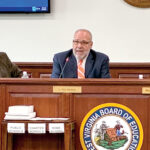
The West Virginia Legislature’s Performance Evaluation and Research Division presented a report Tuesday afternoon to the Legislature’s Post Audit Subcommittee on the condition of state labs.
Auditors looked at labs managed by the Department of Agriculture, the Department of Environmental Protection, the Bureau of Public Health, the Division of Labor, the West Virginia State Police and the Office of the Chief Medical Examiner. Auditors also toured the Kentucky Consolidated Laboratory, a state-managed centralized lab, for comparison.
Senate President Craig Blair, R-Berkeley, and House Speaker Roger Hanshaw, R-Clay, asked for the audit, with the intention of using available federal COVID-19 dollars to upgrade, consolidate, or build new labs, many which are directly involved with coronavirus issues.
“Ultimately, we want to do the right thing for the agencies and the people of West Virginia, and we have the power of the purse,” Blair said. “This has five decades-worth of implications into the future. I pretty well want to have this done yesterday, but we still need to have the information so that we make the right decisions on this.”
“My very first job out of graduate school was working in the Department of Agriculture’s labs,” Hanshaw said. “I can’t think of very many more things that implicate public health beyond our ability to even diagnose diseases right now. I’ve been in all of them; I’ve been in every laboratory mentioned in this report. The quality of the work our state employees are doing in those labs is incredible and commendable.”
According to the report, auditors found most of the state’s lab facilities are old, too small, and set up in buildings that were not designed for laboratory purposes. The audit also found that the facilities do not have proper security perimeters. These issues have caused some of the issues when receiving accreditation.
“Every state-owned laboratory facility PERD toured had significant inadequacies and insufficiencies,” the report stated. “Nearly all the state’s laboratory testing programs are in facilities dating back to the middle of the last century. Not only are they relatively old, but many were not constructed for lab testing purposes.”
“In addition, each of the state’s lab testing programs do not have sufficient lab space in their current facilities, and no facility upgrades or remodeling have occurred to maintain modern standards,” the report continued. “The lack of space and upgrades has made it difficult to maintain scientific standards under each laboratory’s accreditation standards, which in turn, puts at risk current lab testing programs, and precludes the State from conducting new lab testing programs.”
Of the seven labs inspected, five of the labs are in buildings built in the 1950s with only one of the buildings specifically built for lab purposes. Only three lab facilities have secure perimeters and only the DEP’s Air Quality Laboratory has sufficient space. A similar study conducted 15 years ago by the West Virginia Chemical Alliance Zone found similar issues.
PERD recommended a coordinated approach between the state agencies. Both the State Police and Department of Agriculture have hired architectural firms to conduct feasibility studies on upgrades to lab facilities. Upgrades to the State Police lab have an estimated cost of $10 million, while the Department of Agriculture’s estimated cost is $39.4 million for upgrades of its Guthrie facility.
If the state decided to construct new labs for each agency, the cost could be from $169.5 million to $226 million based on different scenarios and construction costs per square feet.
According to the report, 16 states and Washington, D.C., have consolidated labs between multiple government agencies. Some labs are operated by one entity, while some are multiple-agency labs in the same building. The Kentucky Finance and Administration Cabinet owns and manages a centralized lab, built in 1994, where space is leased to other state agencies.
Auditors believe West Virginia can follow a similar model by consolidating some agency-managed labs under one roof at the state-owned West Virginia Regional Technology Park in South Charleston. Built in 1949 by Union Carbide as a research and development center, the Tech Park was donated to the state by Dow Chemical 10 years ago.
The Tech Park has three buildings built specifically for lab purposes, including two vacant buildings, that could be upgraded and renovated. The costs for renovations could be between $50 million and $60 million depending on the specific needs of the agencies.
“Given that the Tech Park is owned by the state, and it has already invested over $10 million into the facilities…any strategy to address the state’s laboratory needs must include the Tech Park as part of the solution,” the report stated.
However, auditors note that the Tech Park doesn’t have room for all state labs, recommending new or expanded facilities for the State Police Forensic Laboratory and a new facility for the Office of Chief Medical Examiner’s autopsy suite. Renovating the State Police lab could cost $10 million, while a new Medical Examiner facility could cost between $45 million and $89 million depending on the size of the facility.
While most of the state agencies fall under the authority of the Governor’s Office and cabinet officials, the Department of Agriculture has its own elected official: Agriculture Commissioner Kent Leonhardt. Since taking office in 2017, Leonhardt has requested funding for lab upgrades, with those requests falling on deaf ears.
“I am really glad to see that attention is being given to the laboratories in the state of West Virginia,” Leonhardt said. “We’ve been harping on this for quite some time. The need for new labs at the Department of Agriculture was identified more than 20 years ago, and it’s time we do something.”
However, Leonhardt said it’s not a good idea to combine agriculture labs, which deal primarily with food and animals, with labs dealing with humans.
“I appreciate the Legislative Auditor’s work on doing their research, but I’m going to disagree with this,” Leonhardt said. “I’m about making sure the citizens of West Virginia are safe. That’s of primary importance to me. I don’t think you really want to combine the animal laboratories with the human laboratories. You don’t want me having a foreign animal disease right next to some studies that are being done for human diseases.”
Auditors recommended an option of building a new state lab for all agencies to share, with such a facility being located outside of Kanawha County to take advantage of available expertise in other parts of the state. They also recommended architectural studies of the state labs to determine precise cost estimates and technical needs.
“Whatever is decided, moving the labs will require careful planning and likely coordination between agencies if they are co-located,” the auditors wrote.
Local News
Valley Head man enters plea
ELKINS — A Randolph County man who faced multiple felony and misdemeanor charges involving a minor entered into a ...

Tygarts Valley senior class earns Jennings Randolph Award

Five Rivers Building to go up in Parsons

Gun incident leads multiple charges
Beautifying the All-Veterans Memorial