
This Week in WV History
Trending
CHARLESTON - The following events happened on these dates in West Virginia history. To read more, go to e-WV: The West Virginia Encyclopedia at www.wvencyclopedia.org.
May 17, 1773: Lawyer and western Virginia political leader Philip Doddridge was born in Pennsylvania. The namesake of Doddridge County, he later served in Congress and, according to Daniel Webster, "was the only man I ever feared to meet in debate."
May 17, 1854: A violent windstorm swept up the Ohio River and severely damaged the Wheeling Suspension Bridge.
May 17, 1862: The Battle of Pigeon Roost took place in Princeton during the Civil War. Union soldiers were noisily approaching Princeton from the southeast, unaware that the Confederates were lying in ambush. The attack left an estimated 18 federal troops killed and 38 wounded.
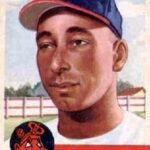
In 1955, while pitching for the Chicago Cubs, Monongah native Sam Jones became the first Black pitcher in Major League Baseball history to toss a no-hitter.
May 18, 1955: While pitching for the Chicago Cubs, Monongah native Sam Jones became the first Black pitcher in Major League Baseball history to toss a no-hitter.
May 18, 1987: Science communicator, writer and TV host Emily Calandrelli was born in Morgantown. After graduating from WVU and MIT, she has hosted her own science children's shows and been a regular on Bill Nye's program. In 2024, she became the 100th woman in history to venture into space.
May 18, 2012: Ice Mountain in Hampshire County was named a National Natural Landmark by the U.S. Department of the Interior at a ceremony to mark the 50th anniversary of the program.
May 19, 1920: Ten people were killed in a shootout sometimes referred to as the Matewan Massacre. The episode occurred when Baldwin-Felts detectives came to Matewan to evict striking miners and their families. Police Chief Sid Hatfield tried to stop the evictions as being unauthorized by law, and a gunfight broke out.
May 20, 1949: Nick Joe Rahall II was born in Beckley. When Rahall first entered Congress in 1977, he was its youngest member. He remained in office until 2015.
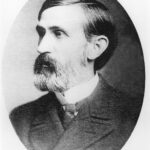
In 1905, William M. O. Dawson became West Virginia's 12th governor.
May 21, 1853: William M. O. Dawson was born in Bloomington, Maryland, just across the Potomac River from what is now the Eastern Panhandle. In 1905, he became West Virginia's 12th governor.
May 22, 1880: West Virginia businessman and politician Vernon E. Johnson was born in Berkeley Springs. He served six terms in the legislature, including twice as Speaker--one of only three West Virginians to hold that office on non-consecutive occasions. At 34, he was the youngest Speaker ever elected in state history.
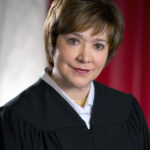
In November 1988, Margaret "Peggy" Workman became the first woman elected to the West Virginia Supreme Court of Appeals and to statewide office in West Virginia.
May 22, 1947: Supreme Court Justice Margaret "Peggy" Workman was born in Charleston. In November 1988, she became the first woman elected to the West Virginia Supreme Court of Appeals and to statewide office in West Virginia.
May 23, 1862: In what became known as the Battle of Lewisburg, Union troops repelled a Confederate advance, killing 38 and wounding 66, while losing only 13 men. Following the battle, Confederate dead lay in the sanctuary of the Old Stone Presbyterian Church.
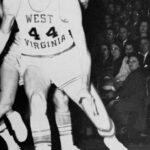
In 1941, Rod Thorn, an All-American at WVU and later an NBA player and executive, was born in Princeton.
May 23, 1941: Rod Thorn was born in Princeton. Declared by the legislature a state "natural resource," Thorn attended West Virginia University, where he was an All-American guard. Thorn had a distinguished NBA career as a player and executive, which included drafting Michael Jordan.
e-WV: The West Virginia Encyclopedia is a project of the West Virginia Humanities Council. For more information contact the West Virginia Humanities Council, 1310 Kanawha Blvd. E., Charleston, WV 25301; (304) 346-8500; or visit e-WV at www.wvencyclopedia.org.