
Mon Forest Towns’ Nease addresses Rotary
Trending
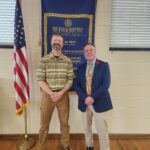
ELKINS – Josh Nease, executive director for Mon Forest Towns Partnership, addressed the Rotary Club of Elkins, giving the group insight into the partnership's operations.
Mon Forest Towns Partnership (MFTP) serves 12 gateway communities to the Monongahela National Forest - Cowen, Davis, Durbin, Elkins, Franklin, Marlinton, Parsons, Petersburg, Richwood, Seneca Rocks, Thomas and White Sulphur Springs. Each town council passed a resolution to join the partnership and then appointed their town's representative who serves on the MFTP board of directors. The mission of MFTP is to collaboratively grow a strong, sustainable recreation economy that enhances the quality of life for residents and visitors by providing the best outdoor experience.
MFTP had it genesis in 2017-2018 when twelve towns across the Monongahela Forest region came together with the U.S. Forest Service, Woodlands Development and Lending, WVU Cooperative Extension and USDA Rural Development to support communities in economic development in bouncing back from the 2016 catastrophic floods experienced in parts of the forest. "They wanted to see if they could support communities in economic development. Over the years, in a series of community meetings and regional meetings, all the towns came together to acknowledge their connection to the national forest, acknowledging their connection to each other. They wanted to work together to leverage the national forest for economic development purposes," said Nease. "They are trying to create places where not just businesses can thrive, but people can thrive, where people can live and want to live." While the towns in the partnership are quite different, they all have similar challenges and assets.
In 2023, Woodlands Community Lenders was the lead on a grant that enabled MFTP to hire its first employee, Nease. That took the group from an all-volunteer coalition to an organization with staff. Shortly thereafter, MFTP received its 501(c)(3) status. The first couple years of Nease's tenure entailed understanding the common needs for all the associated towns and determining what the next phases of the work would look like. "There was a lot the towns had in common and that they could work together regionally to accomplish. All of the towns wanted to be better connected to the national forest and to each other," added Nease. "Every one of the towns was struggling with capacity, with the ability to do a little bit more. In most of our towns, there aren't very many people, so you get a handful of people doing a lot of work."
It was identified that all the towns needed assistance with capital, bringing money and investments into the businesses and the towns. A plan was established and application was made to the Appalachian Regional Commission to help fund the group's work in the region. One emphasis of the plan was connecting downtowns to the national forest. While some towns are surrounded by the national forest and have trailheads in town, some are a little further from an established trailhead. "In Elkins, Mon Forest Towns works closely with the Elkins Area Shared Trail program to help bring more resources towards connecting Elkins to the national forest via those trail systems," said Nease. Some towns will receive way-finding signage while others will have a downtown trailhead established.
MFTP is working with WVU's Brad and Alys Smith Outdoor Economic Development Collaborative and the Regional Planning and Development Councils to create town-to-town connections through a USDOT Thriving Communities grant. In Davis and Thomas, a connector trail is in the works that will allow people to safely travel between towns without having to utilize the highway. "It's beneficial to residents but it's also the Continental Divide Trail and the Allegheny Trail. There are a lot of people moving there all the time," said Nease. Other Thriving Communities projects are underway in Elkins, White Sulphur Springs, Richwood and Cowen. Between the ARC POWER project and the Thriving Communities grant, all the towns are currently engaged in recreation and connectivity planning projects or are in the queue to begin later this year.
Recently, MFTP launched the Mon Forest Towns Gravel and Backpacking Network. This system takes advantage of the many gravel roads in the region and establishes routes with descriptions and GPS mapping that includes over 60 rides, including day rides, multi-day rides and a 600-mile ride that connects all the Mon Forest Towns.
"We are working to help towns with their priority projects to connect their community to outdoor recreation," said Nease. Projects include:
Cowen: Connecting Cowen to the Cranberry Tri Rivers Rail Trail
Davis: Davis - Thomas Connector Trail
Durbin: Connecting to the West Fork Rail Trail/Allegheny Trail
Elkins: Connecting EAST to downtown
Franklin: Peters Mountain Trail System
Marlinton: Downtown Trailhead for Greenbrier River Rail Trail and Monday Lick Trail System
Petersburg: Wayfinding connections to North Fork Mountain and the upcoming Smoke Hole Trail System
Richwood: Connecting downtown to the Cranberry Tri Rivers Rail Trail
Thomas: Davis - Thomas Connector Trail
White Sulphur Springs - Connecting downtown to new recreation assets and public land
The MFTP website contains a page for each town with information about that town. There are itineraries for each town to encourage visitors to visit a new place or stay an extra evening. A print-version regional visitors guide that will focus on the towns and the surrounding recreation assets is in the works.
Since 2022, MFTP has been able to facilitate a grants coordination program. The program is designed to provide critical grant services to the organization and the towns and to increase the towns' ability to submit more, higher quality grant proposals. This service has been very popular and useful for the member towns and the organization. Most towns do not otherwise have access to grant writing support. This allows the town to create more, better and more competitive grant proposals. "We're working all the time to bring more capital, more investment, more funding into the towns to do more of these projects. You've got to be ready when there's a funding opportunity to do some of these types of projects," concluded Nease.
More information about Mon Forest Towns can be found on the organization's website, www.monforesttowns.org.
Rotary is a global network of 1.4 million neighbors, friends, leaders and problem-solvers who see a world where people unite and take action to create lasting change - across the globe, in their communities, and in themselves. Visit www.Rotary.org to learn more about Rotary International, visit the club's Facebook page - Rotary Club of Elkins – or contact 2025-2026 club president Phillips Kolsun at phillipskolsun@gmail.com for more information about the Rotary Club of Elkins.