
Fall of Afghanistan weighs heavily on minds of Warner, Weld
-
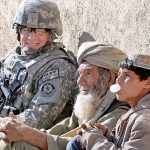
- Photo Courtesy/Department of Defense/U.S. Air Force State Sen. Ryan Weld, as an U.S. Air Force intelligence officer with the Zabul Provincial Reconstruction Team, talks with Afghans during a wroowali, or brotherhood, mission to Bakorzai village, Afghanistan, in 2010.
-
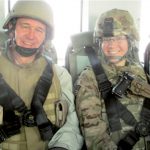
- Photo Provided West Virginia Secretary of State Mac Warner visited his daughter, Capt. Lisa Warner Miller, while both were in Afghanistan during Christmas in 2014.
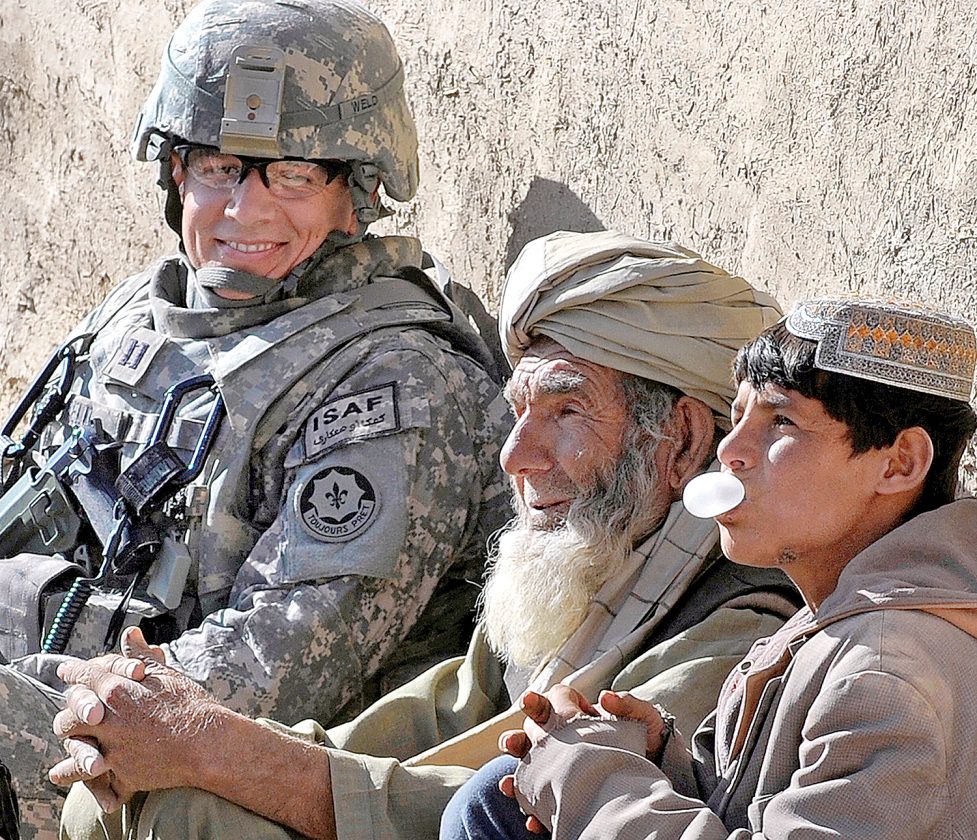
Photo Courtesy/Department of Defense/U.S. Air Force State Sen. Ryan Weld, as an U.S. Air Force intelligence officer with the Zabul Provincial Reconstruction Team, talks with Afghans during a wroowali, or brotherhood, mission to Bakorzai village, Afghanistan, in 2010.
CHARLESTON — The attack on the World Trade Center in New York City is remembered for the loss of life both from the collapse of the buildings and for images of those jumping to their deaths. That attack resulted in the invasion of Afghanistan nearly 20 years ago.
As the solemn anniversary of that attack and the subsequent invasion approaches, it is replaced by new imagery: a resurgent Taliban, the throngs of desperate Afghanis running after U.S. military airplanes, and some falling from those same airplanes after gripping the sides tight — a mirror image of those who jumped to their deaths from the World Trade Center.
Two West Virginia officials watched these images as the U.S. military began its pull-out from Kabul this week. Secretary of State Mac Warner and Senate Majority Whip Ryan Weld, R-Brooke, were both in Afghanistan at different times for different reasons. Both have unique perspectives on the U.S. troop withdrawal and the lightning-speed takeover of the country by the Taliban.
“THIS WAS INEVITABLE”
Warner, now in his second term as Secretary of State, comes from a long line of military service. He retired from the U.S. Army after 23 years, including as the Chief of International Law for the U.S. Army in Europe and on the staff at the U.S. Army War College.
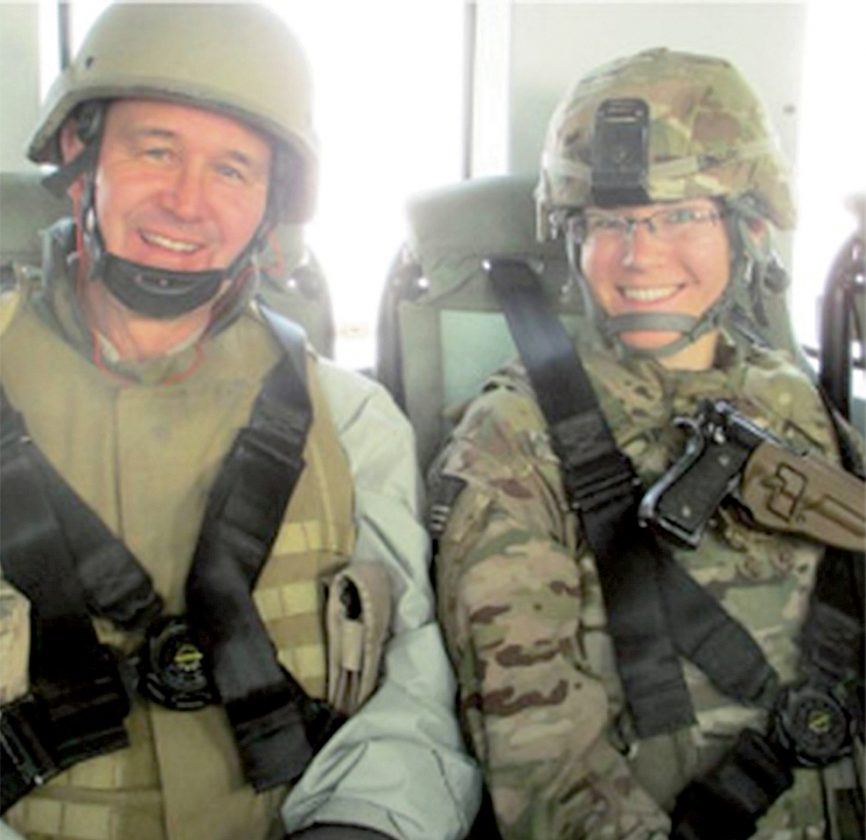
Photo Provided West Virginia Secretary of State Mac Warner visited his daughter, Capt. Lisa Warner Miller, while both were in Afghanistan during Christmas in 2014.
Before returning to West Virginia to begin a campaign for secretary of state, Warner served five years as a contractor for the U.S. State Department in Afghanistan. He served as Chief of the Organizational Capacity Building Section, one of the world’s largest Rule of Law programs. He also advised the Afghan Supreme Court, Attorney General’s office, Ministry of Justice, and Ministry of Women’s Affairs.
Warner said it was only a matter of time before the Taliban would make a move and start reclaiming Afghanistan. The only thing holding the Taliban at bay was the presence of U.S. forces.
“It’s not a surprise whatsoever,” Warner said. “This, this was inevitable, I can tell you that.”
Even back between 2011 and 2015, Warner said he saw signs constantly that the Afghan people themselves were not confident that the U.S. presence in the country would continue, with a reemergence of strict interpretations of Sharia law around the corner that would once again subjugate women or tribes not part of the majority Pashtun tribe.
“The minister of women’s affairs, when I went into her office, she had a loaded AK-47 leaning right up against her wall,” Warner said. “When you see things like that, you know things aren’t going well. When I would talk to my Afghan counterparts, I would ask them, ‘do you want us here?’ Some of them said, yes, but those are typically the minority tribes … they want us there because we are their protection against that majority.”
Four of Warner’s children are serving or have served in the U.S. Army, including in Afghanistan. Capt. Steven Warner was a combat engineer platoon leader in the 173rd Brigade Combat Team (Airborne), and received the Purple Heart in 2017 after being wounded by a roadside bomb in Afghanistan. Capt. Lisa Warner Miller was an Adjutant General Officer with the 130th?Engineer Brigade in Afghanistan.
Warner believes that the way President Joe Biden decided to start pulling U.S. forces out and the chaos that now has the Harmid Karzai International Airport surrounded by Taliban forces was badly handled. But Warner doesn’t agree that the U.S. should have remained in Afghanistan. He believes that once the U.S. killed Osama bin Laden — the leader of Al-Qaeda and the mastermind of the 9/11 attacks — the U.S. should have begun the process of leaving.
“There’s no right answer in Afghanistan,” Warner said. “We managed it for 20 years with a physical military presence. We managed it, but we didn’t solve it and we can’t solve it. Alexander the Great didn’t solve it. Genghis Khan didn’t solve it. The British didn’t solve it. The Soviets didn’t solve it. And now they’ve outlasted us.”
“THE WORST BLUNDER I’VE EVER SEEN”
Weld, an attorney and a Captain in the U.S. Air Force Reserves, served as an intelligence officer with the Zabul Provincial Reconstruction Team in the late 2000s.
“It’s obvious to any observer, no matter how casual or not, no matter what political stripe you are, that our exit could have and should have been handled better,” Weld said. “I think that for the President or anyone to say we calculated this into our decision-making or we priced it into the decision. I mean … it’s either untrue or just the worst blunder I’ve ever seen.”
Having gone on combat missions and working closely with the Afghans, Weld questioned the timing of the pull-out right in the middle of the peak fighting season when Taliban fighters often go on the offensive.
“For us to time our departure during peak fighting season when everybody is back from Pakistan or whatever makes no sense to me,” Weld said. “Then to do it in the rushed manner and the quiet pace that we did it.”
Weld said the crumbling of Afghan military forces was due to losing all logistical and air support from U.S. forces. For Afghan soldiers, their worst nightmare was U.S. forces pulling out in the middle of the night – which was done when the U.S. abandoned Bagram Air Base in July, even shutting the electricity. The base was taken by the Taliban on Aug. 15.
“An act like that was the Afghans’ worst fear,” Weld said. “They were just going to wake up one morning and we were going to be gone and they were on their own without any sort of warning. And that’s exactly what happened. And so not only did it confirm their worst fear, it was also a huge strategic error.”
The way the U.S. pull-out from Afghanistan was handled not only puts remaining military forces in danger, Weld said, but it also endangers those Afghans who helped provide support for U.S. forces, such as interpreters. Weld said they were not given enough time to complete SIV visas that would have given them the ability to travel to the U.S.
“The SIV program is fairly lengthy. you have to get letters of recommendation from a commanding officer that you worked for,” Weld said. “We did not give those people enough time to go through that process.”
Weld, chairman of the state Senate Military Committee, helps work on legislation to help veterans transitioning back to the states. According to the U.S. Department of Veterans Affairs, 17 West Virginians have died in military service in Afghanistan. Veterans make up 10 percent of West Virginia’s population compared to 7 percent nationally.
Weld said he continues work on ways for young veterans to come to West Virginia and make a life here, including job training, housing, and other needs. He believes that President Biden has abandoned those serving in Afghanistan, but West Virginia has an opportunity to welcome Afghanistan veterans with open arms.
“If you are a veteran in the State of West Virginia who served in Afghanistan … all the people here care,” Weld said. “You might feel as if politicians in (Washington) D.C. and wherever don’t because of the way everything has gone in the past couple days, but here people do care and people are very grateful for your service. No matter what you think of the mission and what it became of where you serve, know that the people here care and are grateful for that.”
Local News

Barbour man facing multiple felonies
Fair retires after 15 years in Drug Courts
BOE hears from entities wishing to obtain Harman School
ELKINS - Two of the three entities looking to obtain the Harman School property gave informational presentations to ...
City Demolishes House
Randolph County Democracy Dinner set for June 13
Community Calendar
EDITOR’S NOTE: The Community Calendar is reserved for nonprofit, civic organizations. Unless otherwise noted, ...