
Trending
ELKINS -- The murder case against a Randolph County man has been dismissed after a ruling by the West Virginia Supreme Court of Appeals.
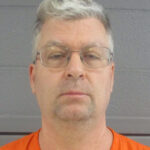
Stephen Ray Cross, 54, of Chenoweth Creek, was charged with murder and using a firearm in the commission of a murder. Those charges have been dismissed after the state Supreme Court of Appeals ruled in favor of preventing Randolph County Circuit Court Judge David Wilmoth from enforcing the circuit court's order that denied the State's motion to dismiss the case.
According to the Supreme Court of Appeals opinion, written by Justice C. Haley Bunn, "The State's motion to dismiss asserted that Mr. Cross's actions were justified by self-defense and that it was 'unaware of any evidence from the investigation that can prove, beyond a reasonable doubt that the defendant did not act in self-defense.'"
The motion to dismiss was filed by Upshur County Prosecuting Attorney Brian Hinkle, who was brought in to represent the State after Randolph County Prosecuting Attorney Michael Parker advised the circuit court he had a conflict of interest. On April 22, Hinkle asked to be replaced by another special prosecuting attorney due to a conflict of interest with a witness for the defense. The case was then given over to Grant County Prosecuting Attorney John Ours.
According to the document, in his request to be replaced, Hinkle also stated that he intended to seek the dismissal of the indictment because "requiring Mr. Cross to stand trial, based on the facts of the case 'would result in a manifest injustice.'"
The Randolph County Circuit Court denied the motion to dismiss, according to Bunn, because it believed that the case "must proceed to trial 'to avoid public misconception of the court system and the case,' and insisting that, because a grand jury had returned the indictment, a petit jury must determine whether self-defense justified Mr. Cross's actions."
After Hinkle was allowed to withdraw, "the court entered an order noting its awareness of 'certain public statements regarding the circumstances of this case recently disseminated in the media by counsel.'"
On Tuesday, in the High Court's ruling, Bunn wrote, "We grant the writ in part as to the circuit court's order denying the State's uncontested motion to dismiss because the circuit court clearly erred and exceeded its legitimate powers by denying the State's motion, because not granting the writ would damage Mr. Cross in a way uncorrectable on appeal, and because the circuit court's order raises issues of law of first impression in West Virginia."
Cross was arrested and charged in March 2023 in the death of Jonathon Chenoweth, 48, after an incident had occurred at Cross' former home on Chenoweth Creek Road.
According to the document released by the West Virginia Supreme Court of Appeals, the incident began after Cross shot and killed a dog belonging to the Chenoweth family. When Chenoweth was informed of the dog being killed, he drove his "side-by-side all-terrain vehicle halfway down Mr. Cross's driveway, parked, and headed toward Mr. Cross 'cussing and ranting,'" according to the High Court's opinion.
The document claims that Cross showed no aggression towards Chenoweth and after being persuaded by Chenoweth's son to turn around and go home, Chenoweth turned the vehicle around and "sped toward the Cross Property." Once he entered the driveway gate, which the document says was approximately 117 feet away from Cross, Chenoweth sped up the vehicle and drove directly at Cross at around "twenty and twenty-five miles per hour." Cross then fired seven shots towards Chenoweth with five shots hitting him.
When asked by law enforcement as to what happened, Cross, according to the document, said, "He tried to kill me. He tried to run over me."
The Supreme Court of Appeals also denied Cross' request for a writ of prohibition in regard to the circuit court's orders that sealed certain filing and precluded counsel from publicly discussing certain issues in the filings.
Bunn claims that the request was denied as Cross "failed to establish his entitlement to a writ prohibiting the orders' enforcement."
The bond for Cross was reduced to a total of $250,000 during a hearing in Randolph County Circuit Court on July 15, during a hearing in which conditions were set for his release on bond.
The motion by Cross' defense attorneys to modify the bond was granted with no objection from Special Prosecutor John Ours.
Wilmoth granted the defense's motion to modify Cross' bond, with his defense citing that the "conditions have changed dramatically since the bond was initially set." Cross' bond was initially set at $2 million in 2023.
Ours told the court that the defense council had spoken to him "extensively" before filing the motion and that he had no opposition to modifying Cross' bond.
The Cross defense team of lawyers includes Ryan Donovan of the Hissam Forman Donovan Ritchie law firm in Charleston, and James Hawkins of Buckhannon.
Cross was granted bond on the conditions that he was not allowed to live at his residence at Chenoweth Creek Road; he was to be under electronic monitoring and home confinement; he was not allowed to have any firearms present at the location where he will be serving in confinement; and he had to give up his passport.
His bond was set at $100,000 cash and $150,000 in property, making $250,000 in total. Cross was allowed to deposit the total amount in cash if he wishes.
The defense attorneys said Cross would be residing at a property in Beverly. Only his wife and children will be able to visit him.
A hearing was held in the Cross case in June behind closed doors in Randolph County Circuit Court.
The hearing was held in camera, a Latin legal term meaning the public was excluded from the courtroom proceeding.
The Inter-Mountain was told that no information about the hearing could be released at that time.